
There’s something incredibly satisfying about digging into a dish of Beef Stuffed Shells fresh from the oven. This Italian-American classic combines tender pasta shells with a rich, savory beef filling and gooey melted cheese, all bathed in a robust tomato sauce. Whether you’re planning a special family dinner or looking for a hearty meal to prepare ahead of time, beef stuffed shells deliver that perfect combination of comfort and flavor that makes everyone feel right at home.
Growing up, this was always a dish that signaled a special occasion in our house. The preparation might take a little time, but the joy on everyone’s faces when those stuffed shells hit the table makes every minute worthwhile. The beauty of beef stuffed shells lies in their versatility—you can dress them up for company or keep them simple for a cozy weeknight dinner. Let’s explore how to create this beloved pasta dish that’s sure to become a regular request in your household.
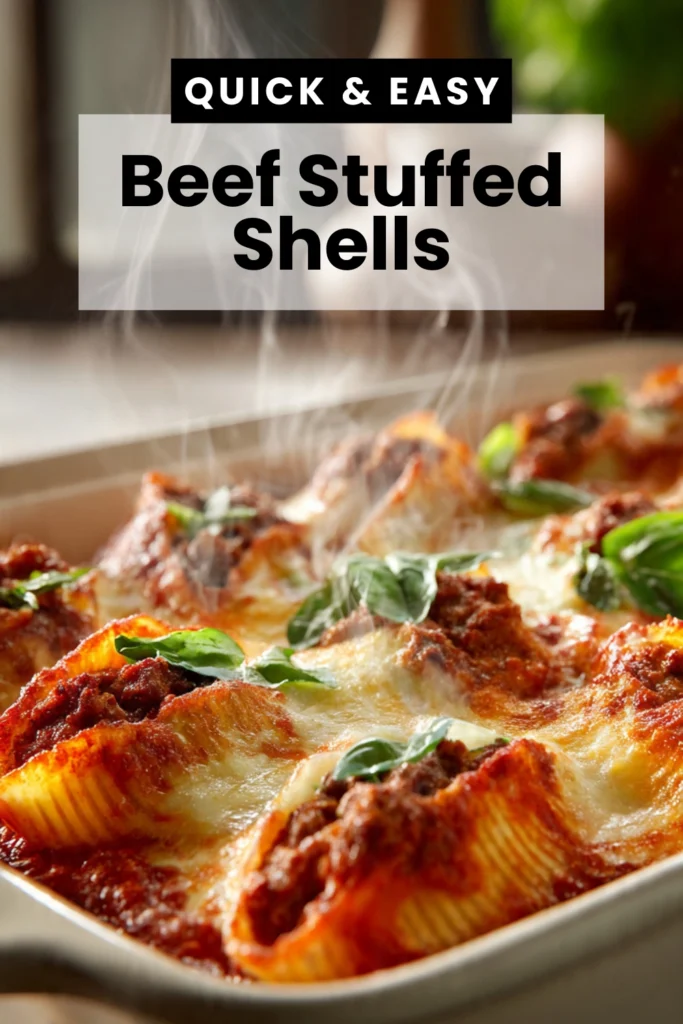
Table of Contents
Table of Contents
Ingredients
For a delicious pan of beef stuffed shells that serves 6-8 people, you’ll need:
For the Shells:
- 1 box (12 oz) jumbo pasta shells
- 1 tablespoon olive oil
- 1 teaspoon salt (for pasta water)
For the Meat Filling:
- 1 pound ground beef (80/20 lean-to-fat ratio works best)
- 1 medium onion, finely diced
- 3 cloves garlic, minced
- 1 teaspoon dried oregano
- 1 teaspoon dried basil
- ½ teaspoon red pepper flakes (optional)
- 1 teaspoon salt
- ½ teaspoon black pepper
- 2 tablespoons tomato paste
For the Cheese Mixture:
- 15 oz ricotta cheese
- 1 large egg, lightly beaten
- 2 cups shredded mozzarella cheese, divided
- ½ cup grated Parmesan cheese
- ¼ cup fresh parsley, chopped
- 1 teaspoon Italian seasoning
- ½ teaspoon salt
- ¼ teaspoon black pepper
For the Sauce:
- 24 oz marinara sauce (homemade or store-bought)
- 1 cup water
- 1 teaspoon sugar (optional, to cut acidity)
- 1 teaspoon dried basil
- ½ teaspoon garlic powder
For Garnish:
- Fresh basil leaves
- Extra grated Parmesan cheese
- Red pepper flakes (optional)
Timing
Understanding the time commitment for preparing Beef Stuffed Shells helps you plan your cooking schedule effectively:
- Prep Time: 30 minutes
- Cooking Time: 45 minutes
- Total Time: 1 hour 15 minutes
Keep in mind that you can prepare components ahead of time to streamline the process. The shells can be cooked, filled, and refrigerated up to 24 hours before baking, making this an excellent make-ahead meal for busy weeknights or entertaining.
Step-by-step Instructions
Preparing the Pasta Shells
- Preheat your oven to 375°F (190°C).
- Bring a large pot of water to a boil. Add salt and a splash of olive oil.
- Add the jumbo shells and cook for about 8-9 minutes until they’re al dente (slightly firm). It’s important not to overcook them as they’ll become too soft and may tear when filling.
- Drain the shells and rinse with cold water to stop the cooking process.
- Spread the shells on a baking sheet lined with parchment paper to prevent sticking while you prepare the filling.
Making the Beef Filling
- In a large skillet over medium-high heat, cook the ground beef, breaking it up with a wooden spoon until no longer pink, about 5-7 minutes.
- Add the diced onion and cook until softened, about 3-4 minutes.
- Stir in the minced garlic, dried oregano, dried basil, red pepper flakes (if using), salt, and pepper. Cook for another minute until fragrant.
- Add the tomato paste and stir to coat the meat mixture. Cook for an additional 2 minutes to develop the flavors.
- Remove from heat and let cool slightly while you prepare the cheese mixture.
Preparing the Cheese Mixture
- In a large mixing bowl, combine the ricotta cheese, beaten egg, 1½ cups of the shredded mozzarella (reserving ½ cup for topping), Parmesan cheese, chopped parsley, Italian seasoning, salt, and pepper.
- Mix until well combined and smooth.
- Fold in the cooled meat mixture until evenly incorporated.
Assembling and Baking
- In a separate bowl, mix the marinara sauce with water, sugar (if using), dried basil, and garlic powder.
- Spread about 1 cup of the sauce mixture on the bottom of a 9×13-inch baking dish.
- Using a spoon or a piping bag, fill each pasta shell with the beef and cheese mixture.
- Arrange the filled shells in the baking dish, open side up.
- Pour the remaining sauce over and around the shells, making sure they’re all coated.
- Sprinkle the reserved ½ cup of mozzarella cheese over the top.
- Cover the dish with aluminum foil, making sure it doesn’t touch the cheese.
- Bake covered for 25 minutes, then remove the foil and bake for an additional 10-15 minutes until the cheese is bubbly and golden.
- Allow to rest for 5-10 minutes before serving.
- Garnish with fresh basil leaves, additional Parmesan cheese, and red pepper flakes if desired.
Nutritional Information
Understanding the nutritional profile of your beef stuffed shells can help you enjoy this delicious dish while being mindful of your dietary needs. The following values are approximate per serving (3-4 stuffed shells):
- Calories: 450-500 kcal
- Protein: 28g
- Carbohydrates: 35g
- Dietary Fiber: 3g
- Sugars: 6g
- Fat: 24g
- Saturated Fat: 12g
- Cholesterol: 110mg
- Sodium: 850mg
- Calcium: 350mg
- Iron: 3mg
Keep in mind that these values may vary depending on specific ingredients used and exact portion sizes. If you’re tracking specific nutrients or following a particular diet plan, you might want to calculate the exact values based on your ingredients.
Healthier Alternatives
Love the idea of beef stuffed shells but looking to make them a bit more nutritious? Here are some thoughtful modifications to lighten up this classic dish without sacrificing flavor:
Advertisement
Protein Options:
- Substitute lean ground beef (93% lean) or ground turkey for traditional ground beef
- Use half ground beef and half finely chopped mushrooms for a “blended” approach
- Consider ground chicken or a plant-based ground meat alternative for those limiting red meat
Cheese Modifications:
- Use part-skim ricotta and reduced-fat mozzarella to lower the fat content
- Incorporate cottage cheese (drained) in place of some or all of the ricotta
- Reduce the overall cheese quantity and focus on adding bold flavors with herbs and spices
Pasta Alternatives:
- Look for whole grain or protein-enriched jumbo shells for added fiber and nutrients
- For a gluten-free option, seek out gluten-free jumbo shells (though they may be more delicate to work with)
Vegetable Boosters:
- Mix finely chopped spinach, kale, or zucchini into the filling for added nutrients and fiber
- Add grated carrots or bell peppers to the meat mixture while cooking
- Include more vegetables in your sauce, such as diced tomatoes, mushrooms, or bell peppers
Serving Suggestions
Transform your beef stuffed shells from a simple meal into a complete dining experience with these complementary sides and presentation ideas:
Side Dish Pairings:
- Fresh Green Salad: A light arugula or mixed greens salad with lemon vinaigrette provides a refreshing contrast to the richness of the shells.
- Garlic Bread: Classic garlic bread or garlic knots are perfect for soaking up extra sauce.
- Roasted Vegetables: Oven-roasted asparagus, broccoli, or Brussels sprouts add color and nutrition to complete the meal.
- Sautéed Greens: Italian-style sautéed spinach or kale with garlic complements the flavors beautifully.
Beverage Pairings:
- Wine: A medium-bodied Italian red like Chianti or Sangiovese works wonderfully with beef stuffed shells.
- Non-alcoholic: Sparkling water with lemon or a light iced tea provides refreshment without overwhelming the flavors.
Presentation Ideas:
- Serve in individual gratin dishes for an elegant presentation at dinner parties
- Sprinkle fresh herbs like basil or parsley just before serving for a pop of color
- Drizzle a small amount of high-quality olive oil over the finished dish for extra richness
- Serve with a small bowl of freshly grated Parmesan cheese on the table
Common Mistakes
Even experienced home cooks can encounter challenges when making beef stuffed shells. Here are some common pitfalls to avoid:
Pasta Problems:
- Overcooking the shells: This makes them tear easily during filling. Always cook them al dente or even slightly firmer.
- Not cooling shells properly: Handling hot shells can lead to burns and tears. Rinse with cold water and allow them to cool completely before filling.
- Skipping the oil in pasta water: A little olive oil helps prevent the shells from sticking together after draining.
Filling Failures:
- Watery filling: Not draining the beef properly or using ricotta with excess moisture can make the filling runny. Strain ricotta if necessary.
- Under-seasoning: The pasta will dilute flavors, so the filling should be well-seasoned. Taste before assembling.
- Overfilling shells: This causes them to split or makes the filling spill out during baking.
Sauce Setbacks:
- Too little sauce: The shells need enough sauce to cook properly in the oven. They’ll absorb some moisture, so be generous.
- Skipping the water in the sauce: This helps create steam in the covered dish, preventing the pasta from drying out.
- Not covering during initial baking: This can lead to dried-out pasta tops and undercooked filling.
Baking Blunders:
- Crowding the shells: Packing them too tightly prevents even cooking and makes serving difficult.
- Skipping the rest time: Serving immediately from the oven doesn’t allow the filling to set properly.
- Baking at too high a temperature: This can burn the cheese before the filling is heated through.
Storage Tips
One of the greatest advantages of beef stuffed shells is how well they store for future meals. Here’s how to properly store, freeze, and reheat this delicious dish:
Refrigeration:
- Cool completely before refrigerating to prevent condensation
- Cover the baking dish tightly with aluminum foil or transfer to airtight containers
- Store in the refrigerator for up to 3-4 days
- When reheating, add a splash of water or extra sauce to prevent drying
Freezing Unbaked Stuffed Shells:
- Prepare the recipe through the assembly stage but don’t bake
- Use a freezer-safe dish or aluminum foil disposable containers
- Cover tightly with plastic wrap and then aluminum foil
- Label with the date and cooking instructions
- Freeze for up to 3 months
- When ready to use, thaw in the refrigerator overnight and bake as directed, adding 10-15 minutes to the baking time
Freezing Baked Stuffed Shells:
- Cool completely after baking
- Portion into meal-sized containers (individual portions work well for quick lunches)
- Remove as much air as possible before sealing
- Freeze for up to 2 months
- For best results, thaw in the refrigerator before reheating
Reheating Tips:
- Oven method: Cover with foil and reheat at 350°F (175°C) for about 20-25 minutes until heated through
- Microwave method: For individual portions, microwave on medium power with a splash of water for 2-3 minutes, checking halfway through
- Adding fresh garnishes: Regardless of reheating method, add fresh herbs, a sprinkle of Parmesan, or a drizzle of olive oil just before serving to refresh the flavors
Conclusion
Beef stuffed shells represent comfort food at its finest—a perfect marriage of pasta, rich meat filling, cheese, and tangy tomato sauce that creates a meal greater than the sum of its parts. While they might take a bit more effort than some weeknight meals, the results are well worth it, especially when you see the appreciation on your family’s faces as they dig in.
FAQs
Can I make beef stuffed shells ahead of time?
Absolutely! You can prepare beef stuffed shells up to 24 hours in advance. Simply assemble the dish, cover it tightly with plastic wrap or aluminum foil, and refrigerate. When ready to cook, remove from the refrigerator about 30 minutes before baking to take the chill off, then bake as directed, possibly adding 5-10 minutes to the cooking time.
What can I use if I can’t find jumbo pasta shells?
If jumbo shells aren’t available, you have several options. Manicotti tubes work wonderfully with the same filling—simply pipe the filling into the tubes instead. Alternatively, you could layer the components lasagna-style, or even roll the filling in large cooked lasagna noodles to make “roll-ups.” The flavors will be the same, just in a different form.
Can I use a different type of meat in stuffed shells?
Definitely! Ground turkey, chicken, Italian sausage, or even a plant-based ground meat substitute can be used in place of beef. Each will bring a slightly different flavor profile to the dish. Italian sausage adds wonderful flavor but can be a bit fattier, while ground turkey or chicken creates a lighter dish. You can also use a combination of meats for added complexity.
Why are my stuffed shells watery after baking?
Excess moisture can come from several sources. Your ricotta might have been too wet (drain it in a fine-mesh sieve for 30 minutes if very wet), the meat wasn’t drained properly after cooking, or perhaps the sauce was too thin. Another common issue is overcooking the pasta shells, which can release starch into the dish. Ensure you’re cooking the shells to al dente, draining the meat well, and using a relatively thick sauce.
How do I prevent the shells from tearing when I fill them?
First, avoid overcooking the shells—they should be just al dente (still slightly firm). Cool them completely before handling by rinsing with cold water after draining. When filling, use a gentle touch and either a small spoon or a piping bag made from a zip-top bag with the corner snipped off. Don’t overfill them, as this puts pressure on the pasta. Finally, handle them by the sturdier curved side rather than the more delicate opening when transferring to the baking dish.