
There’s something deeply comforting about a pot of homemade Beef Bolognese simmering away on the stove, filling your kitchen with the most heavenly aromas. This classic Italian sauce, with its rich depth of flavor and velvety texture, has the remarkable ability to transform a simple plate of pasta into something truly magical. The authentic Beef Bolognese is far more than just a meat sauce – it’s a labor of love that rewards patience with incredible flavor. Whether you’re cooking for a cozy family dinner or impressing guests at a dinner party, mastering this timeless recipe is a culinary skill worth having in your repertoire. Today, I’ll guide you through creating a Beef Bolognese that rivals what you’d find in the trattorias of Bologna, with tender meat, complex flavors, and that perfect silky consistency that clings beautifully to pasta.
The beauty of Beef Bolognese lies in its careful balance of ingredients and the gentle transformation that happens when they’re given proper time to meld together. Unlike quick-cook sauces, a true Beef Bolognese develops its character through slow simmering, allowing the meat to become incredibly tender and the flavors to deepen into something truly extraordinary.
Table of Contents
Table of Contents
Ingredients
For this authentic Beef Bolognese recipe, you’ll need:
- 2 tablespoons olive oil
- 1 large onion, finely diced
- 2 carrots, finely diced
- 2 celery stalks, finely diced
- 4 garlic cloves, minced
- 1½ pounds (700g) ground beef (preferably 80/20 lean-to-fat ratio)
- ¼ pound (115g) pancetta or bacon, finely diced (optional but adds wonderful depth)
- 1 cup dry red wine (such as Chianti or Sangiovese)
- 2 tablespoons tomato paste
- 2 cans (28 oz each) crushed tomatoes
- 2 bay leaves
- 1 teaspoon dried oregano
- ½ teaspoon dried thyme
- 2 cups beef broth (preferably low-sodium)
- ½ cup whole milk or heavy cream
- Salt and freshly ground black pepper, to taste
- 1 pinch of nutmeg (optional, but traditional)
- Fresh basil leaves, for garnish
- Freshly grated Parmigiano-Reggiano cheese, for serving
- 1 pound (450g) pasta of choice (traditionally tagliatelle or pappardelle)
Timing
Preparing an authentic Beef Bolognese isn’t a quick weeknight meal – it’s a leisurely cooking experience that rewards patience:
- Preparation time: 20 minutes
- Initial sautéing: 15 minutes
- Simmering time: 2-3 hours (minimum 2 hours, but 3-4 hours will develop even better flavor)
- Total time: Approximately 3 hours
While the cooking time might seem lengthy, much of it is hands-off, allowing you to attend to other tasks while your sauce bubbles away and fills your home with mouthwatering aromas. The extended simmering is what transforms the individual ingredients into a cohesive, rich sauce that’s well worth the wait.
Step-by-step instructions
- Prepare your soffritto: Heat the olive oil in a large heavy-bottomed pot or Dutch oven over medium heat. Add the finely diced onion, carrots, and celery (this is your soffritto – the aromatic base of many Italian dishes). Sauté gently for 6-8 minutes until softened but not browned. Add the minced garlic and cook for another minute until fragrant.
- Brown the meat: If using pancetta or bacon, add it now and cook until the fat begins to render, about 3 minutes. Increase heat to medium-high and add the ground beef, breaking it apart with a wooden spoon. Cook until no longer pink, about 5-7 minutes. Avoid stirring too frequently to allow proper browning.
- Deglaze with wine: Pour in the red wine, scraping the bottom of the pot to release any browned bits (these contain tremendous flavor!). Allow the wine to simmer until it has reduced by about half, approximately 3-4 minutes.
- Build the sauce: Stir in the tomato paste and cook for 1-2 minutes to caramelize slightly. Add the crushed tomatoes, bay leaves, oregano, thyme, and beef broth. Bring to a gentle boil, then reduce heat to maintain a very low simmer.
- Low and slow: Partially cover the pot and simmer for at least 2 hours, stirring occasionally to prevent sticking. The sauce should bubble very gently – aggressive boiling will toughen the meat.
- Add richness: After 2 hours, stir in the milk or cream, which adds richness and helps balance the acidity of the tomatoes. Continue to simmer for another 30 minutes to an hour.
- Season to perfection: Remove bay leaves. Season with salt and freshly ground black pepper to taste. Add the pinch of nutmeg if using, which adds a subtle warmth and complexity.
- Cook the pasta: About 15 minutes before serving, bring a large pot of generously salted water to a boil. Cook your pasta according to package instructions until al dente.
- Combine: Rather than simply topping pasta with sauce, the Italian way is to finish cooking the pasta in the sauce. Drain the pasta, reserving a cup of cooking water, and add the pasta directly to the Bolognese. Toss gently, adding a splash of pasta water if needed to achieve the perfect consistency.
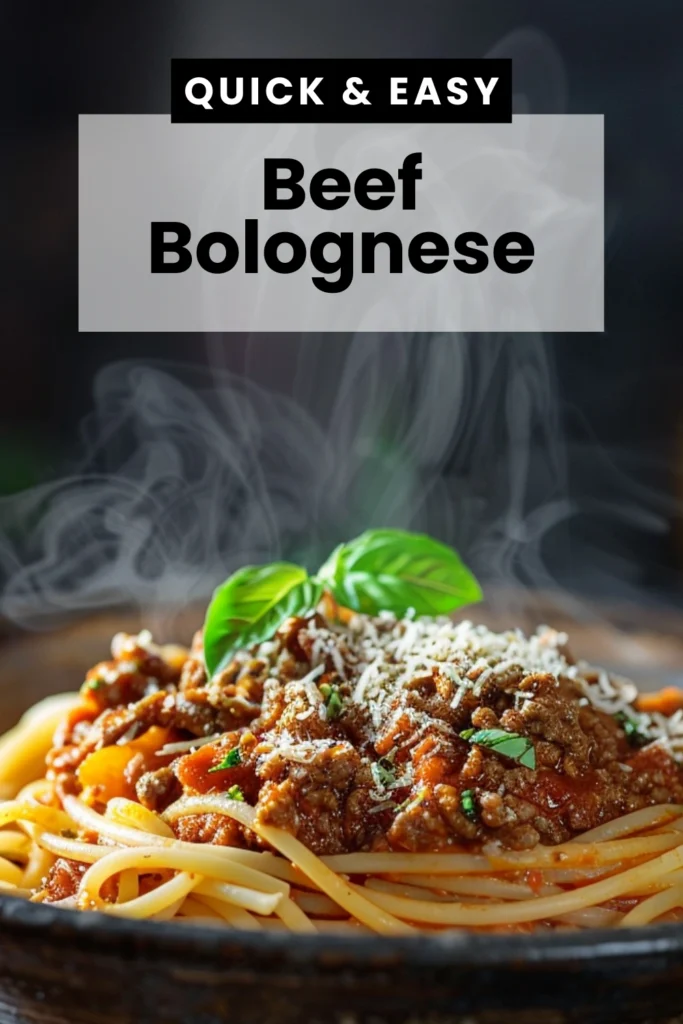
- Serve: Serve immediately in warmed bowls, garnished with fresh basil and a generous sprinkle of freshly grated Parmigiano-Reggiano.
Nutritional Information
While Beef Bolognese is certainly a hearty dish, understanding its nutritional profile can help you incorporate it into a balanced diet. Keep in mind that these values are approximate per serving (assuming 6 servings) and include the sauce only, not the pasta:
- Calories: 390-450 kcal
- Protein: 28-32g
- Carbohydrates: 12-15g
- Fat: 24-28g
- Fiber: 3-4g
- Sodium: 580-620mg (varies based on salt added and broth used)
The sauce provides an excellent source of protein from the beef, along with vitamins and minerals from the vegetables. When paired with pasta, it creates a complete meal that provides both protein and carbohydrates for energy.
Healthier Alternatives
If you’re looking to make a lighter version of this classic dish, here are some modifications that maintain the delicious flavor while reducing calories and fat:
Advertisement
- Leaner meat: Use 90/10 or 93/7 lean ground beef, or substitute half the beef with ground turkey.
- Vegetable boost: Double the mirepoix (carrots, celery, onions) and add finely chopped mushrooms to reduce the meat quantity while maintaining volume and adding umami.
- Dairy options: Replace heavy cream with half-and-half, whole milk, or even unsweetened almond milk for a lighter finish.
- Pasta alternatives: Serve over zucchini noodles, spaghetti squash, or whole grain pasta instead of traditional refined pasta.
- Reduce oil: Use a non-stick pan and less olive oil for the initial sautéing.
- Lower sodium: Opt for low-sodium broth and canned tomatoes, and be mindful of added salt.
Even with these modifications, you can still achieve a flavorful and satisfying Bolognese that honors the spirit of the traditional recipe.
Serving Suggestions
While tagliatelle pasta is the traditional pairing for Bolognese in Bologna, there are many delicious ways to serve this versatile sauce:
- Pasta pairings: Beyond tagliatelle, try with pappardelle, fettuccine, or rigatoni. The sauce clings beautifully to these shapes. Spaghetti, though common in American restaurants, is not traditional but still works well.
- Lasagna: Use your Bolognese as the meat layer in an authentic lasagna Bolognese.
- Polenta: Spoon the rich sauce over creamy polenta for a gluten-free option.
- Stuffed vegetables: Use as a filling for stuffed bell peppers or zucchini.
- Italian bread: Serve with crusty ciabatta or garlic bread for dipping.
- Side salad: Balance the richness with a crisp arugula salad dressed simply with lemon, olive oil, and Parmesan.
For a complete Italian dining experience, start with a light antipasto, serve the Bolognese as your primi (first course), follow with a simple secondi of grilled meat or fish, and finish with fresh fruit or a light dessert like panna cotta.
Common Mistakes
Even experienced home cooks can fall into these common traps when making Beef Bolognese:
- Rushing the process: Bolognese is all about slow cooking. Shortcuts will result in tough meat and underdeveloped flavor.
- Cooking at too high heat: Keep the simmer gentle – aggressive boiling breaks down the sauce structure and toughens the meat.
- Skipping the soffritto: Those finely diced vegetables are essential for building the foundation of flavor.
- Not browning the meat properly: Take time to properly brown the beef, which develops crucial flavor compounds.
- Too much tomato: Authentic Bolognese isn’t a tomato sauce with meat – it’s a meat sauce with some tomato.
- Forgetting the milk: This traditional ingredient adds silkiness and helps balance acidity.
- Over-seasoning early: Salt should be added conservatively during cooking and adjusted at the end, as the sauce reduces and flavors concentrate.
- Drowning the pasta: The sauce should coat the pasta, not float it. Italian tradition favors less sauce than is common in American servings.
Storage Tips
One of the wonderful things about Beef Bolognese is that it often tastes even better the next day as the flavors continue to meld:
- Refrigeration: Cool the sauce completely, then store in airtight containers in the refrigerator for up to 3-4 days.
- Freezing: Bolognese freezes beautifully. Portion into freezer-safe containers or heavy-duty freezer bags, leaving some room for expansion. It will keep well for up to 3 months.
- Thawing: Thaw overnight in the refrigerator for best results.
- Reheating: Warm gently on the stovetop over medium-low heat, adding a splash of broth or water if needed to achieve desired consistency.
- Make ahead: Consider making a double batch specifically to freeze for future quick meals.
- Sauce only: Always store the sauce separately from pasta. Cook fresh pasta when you’re ready to serve the leftover sauce.
Conclusion
Making an authentic Beef Bolognese is truly one of cooking’s great pleasures – a process that rewards patience and care with incredible flavor. While it may not be the quickest meal to prepare, the rich, complex result and the wonderful aromas that fill your home make it well worth the effort. This classic Italian sauce embodies the essence of slow food: simple ingredients transformed through time and technique into something extraordinary.
What makes Bolognese so special is how it brings people together around the table, creating those moments of shared enjoyment that are at the heart of Italian food culture. Whether you’re serving it for a Sunday family dinner or a special gathering with friends, this recipe is sure to create warm memories and satisfied appetites. Remember, cooking is as much about the journey as the destination – so pour yourself a glass of wine, embrace the process, and enjoy creating this timeless culinary classic in your own kitchen.
FAQs
Can I make Beef Bolognese in a slow cooker?
Yes! After browning the meat and vegetables on the stovetop, transfer everything to a slow cooker along with the remaining ingredients (except the milk/cream). Cook on low for 6-8 hours, adding the milk during the last 30 minutes. This method works beautifully and is perfect for busy days.
Why does authentic Bolognese contain milk?
Milk serves two important purposes in Bolognese: it helps tenderize the meat by breaking down proteins, and it balances the acidity of the tomatoes and wine. The result is a smoother, more balanced sauce with a silkier texture. It’s a traditional ingredient that shouldn’t be skipped.
Can I use different meats in my Bolognese?
Absolutely! Traditional Bolognese ragù often contains a mixture of meats. Try a combination of ground beef, pork, and veal for a more complex flavor. Some recipes even incorporate small amounts of pancetta, prosciutto, or Italian sausage removed from its casing for added richness and depth.
Why is my Bolognese sauce watery?
A watery Bolognese usually indicates it hasn’t been simmered long enough. The sauce should cook uncovered for part of the time to allow moisture to evaporate and the sauce to thicken naturally. If you’re short on time, you can remove the lid completely during the final 30 minutes of cooking to help reduce the sauce more quickly.