
There’s something undeniably comforting about a well-made Beef & Potato Hash. This humble dish has graced family tables for generations, offering a perfect blend of crispy potatoes, savory beef, and aromatic vegetables that come together in a single skillet. Whether you’re looking for a hearty breakfast to start your day or a satisfying dinner on a chilly evening, beef and potato hash delivers that warm, homey feeling that good comfort food should. The beauty of this dish lies in its simplicity and adaptability – you can dress it up or down depending on what’s in your pantry. Let’s explore how to create this classic dish that will surely become a family favorite in your home.
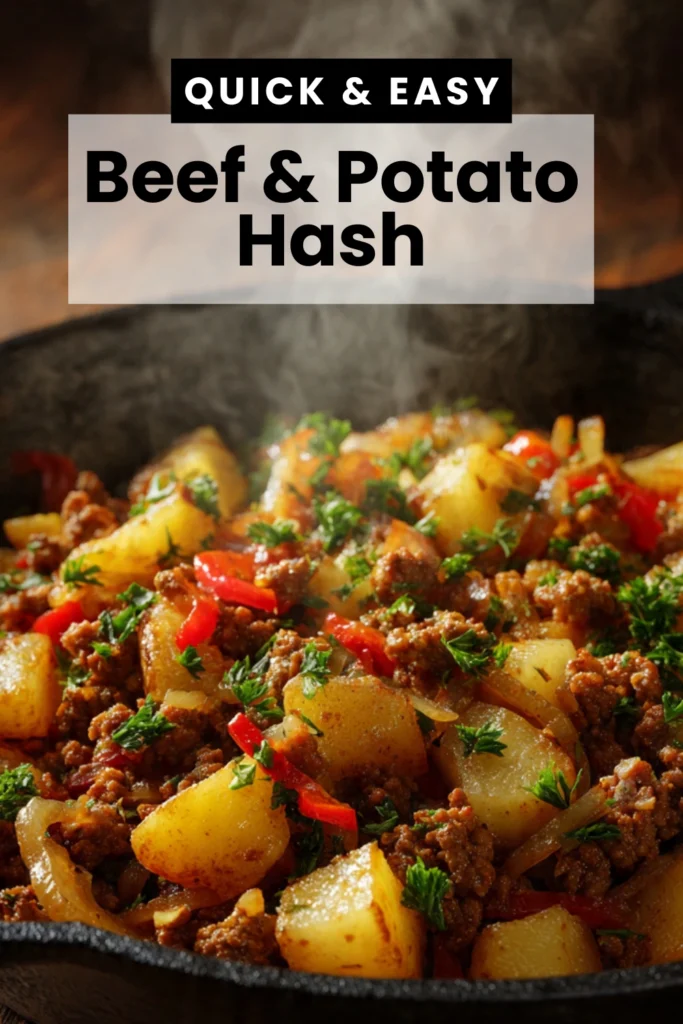
Table of Contents
Table of Contents
Ingredients
The beauty of beef and potato hash is that it requires simple, everyday ingredients that you likely already have in your kitchen. Here’s what you’ll need to feed 4-6 people:
For the Base Hash:
- 2 pounds russet potatoes (about 4 medium potatoes), scrubbed clean
- 1 pound beef (leftover roast beef works wonderfully, or use ground beef or steak cuts)
- 1 large yellow onion, diced
- 1 red bell pepper, diced
- 2 cloves garlic, minced
- 3 tablespoons vegetable oil or bacon fat
- 2 tablespoons butter
- 1 teaspoon paprika
- 1/2 teaspoon dried thyme
- Salt and freshly ground black pepper to taste
Optional Add-ins:
- 4 eggs (for topping)
- 1/4 cup chopped fresh parsley
- 2 green onions, sliced
- 1/2 cup shredded cheddar cheese
- Hot sauce to serve
The versatility of hash means you can adapt it based on what’s in your refrigerator. Have some leftover vegetables from last night’s dinner? Toss them in! Got a different type of meat on hand? That works too! The recipe is wonderfully forgiving and perfect for customization.
Timing
Preparing a delicious beef and potato hash doesn’t have to take all day. Here’s a breakdown of the time commitment:
- Prep time: 15-20 minutes (dicing potatoes and vegetables)
- Cooking time: 25-30 minutes
- Total time: 40-50 minutes
The active cooking time is relatively short, but you’ll want to be attentive to the pan to ensure your potatoes get that perfect crisp exterior while staying tender inside. The key to a great hash is patience – allowing the ingredients to develop a golden crust before stirring them around.
Step-by-Step Instructions
Follow these instructions for hash perfection:
1. Prepare Your Potatoes
Dice your potatoes into 1/2-inch cubes. For faster cooking, you can parboil them first: place potato cubes in cold salted water, bring to a boil, and cook for about 3-5 minutes until slightly tender but not fully cooked. Drain well and pat dry with paper towels. Alternatively, you can dice them smaller and cook them entirely in the skillet, which will take a bit longer.
2. Cook the Beef (if using raw)
If you’re using raw ground beef or diced steak, heat 1 tablespoon of oil in a large cast-iron skillet over medium-high heat. Add the beef and cook until browned, about 5-7 minutes. Season with salt and pepper. Remove the beef from the pan and set aside. If using leftover cooked beef, simply dice it and set it aside to add later.
Advertisement
3. Create the Base
In the same skillet, add the remaining oil and butter. Once the butter has melted, add the diced onions and cook for 2-3 minutes until they begin to soften. Add the bell peppers and garlic and cook for another 2 minutes.
4. Add the Potatoes
Add the diced potatoes to the skillet, spreading them in an even layer. Season with paprika, thyme, salt, and pepper. Let them cook undisturbed for about 5-6 minutes until they begin to develop a golden crust on the bottom.
5. The Patience Game
Once the potatoes have started to crisp up, gently flip them with a spatula to brown the other sides. Continue cooking for another 8-10 minutes, turning occasionally, until the potatoes are crispy on the outside and tender inside.
6. Reintroduce the Beef
Add the cooked beef back to the skillet, gently folding it into the potato mixture. Cook for an additional 3-4 minutes to heat through and let the flavors meld together.
7. Optional Egg Topping
If you’re adding eggs, create 4 small wells in the hash mixture and crack an egg into each well. Cover the skillet and cook for 3-5 minutes until the eggs are set to your preference.
8. Final Touches
Remove from heat and sprinkle with fresh parsley, green onions, and cheese if desired. Let the cheese melt from the residual heat, and serve hot, with hot sauce on the side for those who enjoy a kick.
Nutritional Information
While beef and potato hash is definitely a hearty dish, it’s good to be aware of its nutritional profile. Here’s an approximate breakdown per serving (based on 6 servings without optional toppings):
- Calories: 380-420 calories
- Protein: 20-25g
- Carbohydrates: 35-40g
- Fiber: 3-4g
- Fat: 18-22g
- Sodium: 300-400mg (varies based on seasoning)
The nutritional content will vary depending on your specific ingredients and portions. If you’re using leaner cuts of beef and monitoring your oil usage, you can reduce the fat content significantly. The addition of bell peppers and onions contributes valuable vitamins and antioxidants, making this a more balanced meal than you might initially think.
Healthier Alternatives
While traditional beef and potato hash is delicious as is, there are several ways to create a lighter version without sacrificing flavor:
Ingredient Swaps:
- Sweet potatoes instead of white potatoes: Lower on the glycemic index and packed with vitamins A and C
- Lean ground beef or turkey: Reduces fat content while maintaining protein
- Olive oil instead of butter: Provides heart-healthy fats
- More vegetables: Add zucchini, mushrooms, or spinach to increase fiber and nutrients
- Egg whites: If topping with eggs, use egg whites to reduce cholesterol
Cooking Methods:
- Oven-roasting: Toss potatoes with a minimal amount of oil and roast them before combining with other ingredients
- Non-stick pan: Use a good quality non-stick pan to reduce the amount of oil needed
- Steaming: Pre-steam your potatoes before pan-frying to reduce oil absorption
By making these simple adjustments, you can create a more nutritionally balanced meal that still delivers all the comfort and satisfaction of traditional hash.
Serving Suggestions
Beef and potato hash is versatile enough to be served at any meal of the day. Here are some suggestions for making it a complete dining experience:
For Breakfast:
- Serve with a side of fresh fruit to balance the savory flavors
- Add those sunny-side-up eggs on top for a protein boost
- Include a slice of whole grain toast for extra fiber
- Offer a small cup of yogurt on the side for a probiotic component
For Lunch or Dinner:
- Add a crisp green salad with a light vinaigrette
- Serve with steamed or roasted seasonal vegetables
- Include a slice of crusty bread for sopping up those delicious juices
- Offer pickled vegetables or sauerkraut for a tangy contrast
Beverage Pairings:
- Morning: Coffee, orange juice, or a green smoothie
- Midday: Iced tea or sparkling water with lemon
- Evening: A robust red wine like Cabernet Sauvignon or a craft beer
The beauty of hash is that it’s a complete meal on its own, but these accompaniments can elevate it and create a more balanced dining experience.
Common Mistakes
Even the simplest dishes have their pitfalls. Here are some common mistakes to avoid when making beef and potato hash:
- Overcrowding the pan: This leads to steaming rather than crisping. If necessary, cook in batches or use a larger pan to ensure everything has space to brown properly.
- Stirring too frequently: Allow potatoes to develop a crust before flipping them. Patience is key!
- Using too little fat: While you don’t want to drown your hash in oil, a sufficient amount is necessary to get that golden exterior on your potatoes.
- Cutting potatoes inconsistently: Uneven pieces will cook at different rates, leaving some burnt and others undercooked. Aim for uniform sizes.
- Underseasoning: Potatoes need generous seasoning. Don’t be shy with salt, pepper, and herbs.
- Adding everything at once: Different ingredients require different cooking times. Layer them appropriately to ensure nothing is overcooked or undercooked.
- Using watery potatoes: After parboiling, ensure potatoes are thoroughly drained and patted dry to achieve maximum crispness.
Avoiding these common mistakes will help you achieve hash perfection every time!
Storage Tips
Made too much hash? Don’t worry, it stores well and can be repurposed for future meals:
Refrigeration:
Allow the hash to cool completely, then store it in an airtight container in the refrigerator for up to 3-4 days. When reheating, add a splash of water or broth to prevent it from drying out.
Freezing:
While you can freeze beef and potato hash, the texture of the potatoes may change slightly upon thawing. If you choose to freeze it:
- Portion into freezer-safe containers
- Label with the date and contents
- Freeze for up to 2-3 months
- Thaw overnight in the refrigerator before reheating
Reheating:
- Stovetop: The best method for maintaining crispiness. Heat a skillet over medium heat, add a little oil, and reheat the hash, stirring occasionally until hot throughout.
- Microwave: The quickest method, but potatoes will lose their crispness. Cover with a damp paper towel and heat in 30-second increments until warmed through.
- Oven: Spread the hash on a baking sheet and heat at 350°F (175°C) for about 10-15 minutes until hot.
Repurposing Leftovers:
Transform leftover hash into new meals:
- Stuff into bell peppers and bake with cheese on top
- Roll into a breakfast burrito with scrambled eggs
- Use as a filling for omelets
- Add broth to create a hearty soup base
With these storage tips, nothing goes to waste, and you can enjoy your delicious creation for days to come.
Conclusion
Beef and potato hash is more than just a meal—it’s a celebration of comfort food at its finest. This one-skillet wonder brings together simple ingredients to create something truly satisfying that works for breakfast, lunch, or dinner. The beauty of this dish lies in its adaptability; you can customize it based on what you have available and your personal preferences.
FAQs
Can I make beef and potato hash ahead of time?
You can prepare the components ahead of time (dice potatoes and store them in water in the refrigerator, cook beef, and chop vegetables), but for the best texture, it’s ideal to cook the hash fresh. If you must make it completely ahead, reheat it in a skillet with a bit of oil to restore some crispness.
What kind of potatoes work best for hash?
Russet potatoes are ideal because they get crispy on the outside while remaining fluffy inside. However, Yukon Gold potatoes work well too and hold their shape better. Red potatoes have a waxier texture but can be used if that’s what you have on hand.
Can I make this vegetarian?
Absolutely! Simply omit the beef and either enjoy it as a potato hash with extra vegetables, or substitute with a plant-based protein like crumbled tempeh, firm tofu, or a plant-based ground beef alternative. You could also add beans for protein and texture.
My hash isn’t getting crispy. What am I doing wrong?
There are several potential issues: your pan might be overcrowded, your heat might be too low, your potatoes might have too much moisture, or you might be stirring too frequently. Make sure potatoes are well-dried after washing or parboiling, use a large enough pan, keep heat at medium-high, and resist the urge to constantly stir.
What’s the best pan for making hash?
A well-seasoned cast iron skillet is ideal for making hash because it distributes heat evenly and helps create a beautiful crust on the potatoes. However, any heavy-bottomed skillet will work. Non-stick pans are convenient but won’t develop quite the same level of crispiness as cast iron.