
There’s something inherently comforting about digging into a well-crafted Beef Taco Bowl. It’s like having all the joy of taco night bundled into one convenient, customizable dish that wraps you in familiar flavors and textures. This hearty meal combines seasoned ground beef, fluffy rice, vibrant vegetables, and all your favorite toppings in a single bowl that satisfies both your hunger and your soul. When you’re craving A delicious Mexican-inspired dinner without the fuss of assembling individual tacos, this bowl concept delivers all the flavors you love in a more laid-back format. Whether you’re feeding a family on a busy weeknight or looking for meal-prep options that actually excite your taste buds, the beef taco bowl is a versatile choice that never disappoints.
Today, I’ll guide you through creating a beef taco bowl that balances authentic flavors with home-cooked comfort. We’ll explore everything from selecting the best ingredients to avoiding common pitfalls, ensuring your bowl turns out perfect every time. Let’s create a meal that brings a little fiesta to your dinner table!
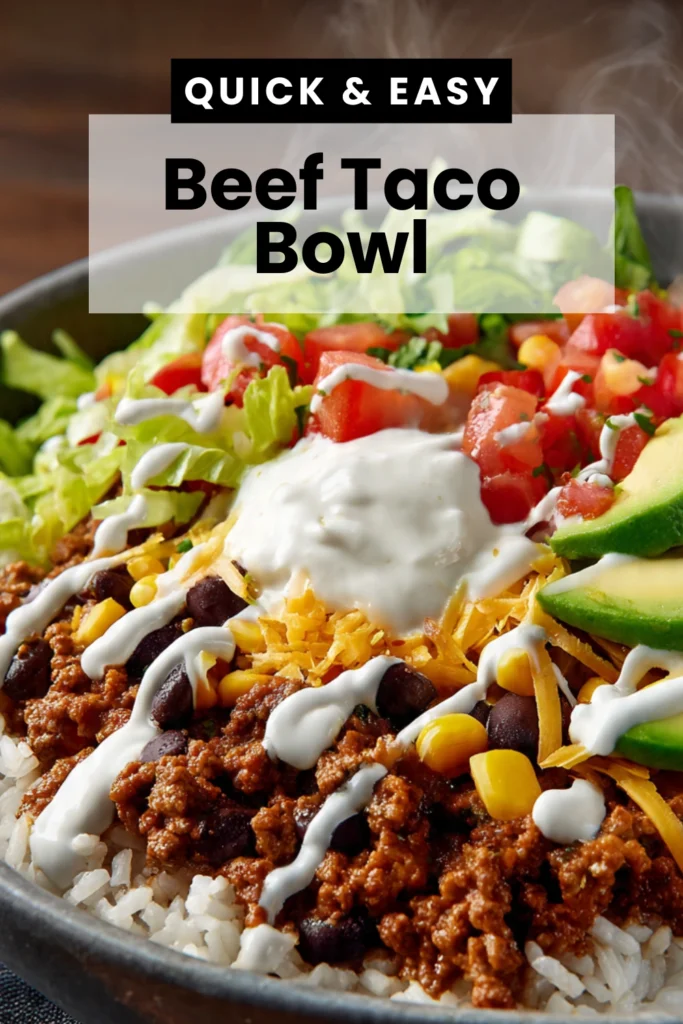
Table of Contents
Table of Contents
Ingredients
The beauty of a beef taco bowl lies in its wonderful blend of flavors and textures. Here’s everything you’ll need to create a perfectly balanced bowl that serves four people:
For the Beef
- 1 lb ground beef (80/20 lean-to-fat ratio works best)
- 1 small onion, finely diced
- 3 cloves garlic, minced
- 1 tablespoon olive oil
- 2 tablespoons homemade taco seasoning (or 1 packet store-bought)
- ½ cup water or beef broth
- 1 tablespoon tomato paste (optional, for richness)
Homemade Taco Seasoning (if making your own)
- 1 tablespoon chili powder
- 1 teaspoon ground cumin
- 1 teaspoon garlic powder
- 1 teaspoon onion powder
- ½ teaspoon dried oregano
- ½ teaspoon paprika (smoked paprika adds wonderful flavor)
- ¼ teaspoon salt
- ¼ teaspoon black pepper
- ¼ teaspoon crushed red pepper flakes (optional, for heat)
For the Base
- 2 cups cooked rice (white, brown, or cilantro-lime rice all work beautifully)
- 1 can (15 oz) black beans, drained and rinsed
- 1 cup corn kernels (fresh, frozen, or fire-roasted)
For the Toppings
- 1 cup cherry tomatoes, halved
- 1 avocado, diced
- ½ cup red onion, finely diced
- 1 jalapeño, thinly sliced (seeds removed for less heat)
- ¼ cup fresh cilantro, chopped
- 1 cup shredded lettuce
- 1 cup shredded cheese (cheddar, Monterey Jack, or a Mexican blend)
- ½ cup sour cream
- Lime wedges, for serving
- Hot sauce, for serving
Timing
Creating a delicious beef taco bowl doesn’t require hours in the kitchen. Here’s a breakdown of the time investment:
- Prep Time: 15 minutes (chopping vegetables and measuring ingredients)
- Cook Time: 20 minutes (cooking beef and assembling)
- Total Time: 35 minutes
If you’re making the rice fresh, add an additional 15-20 minutes, though this can be done in advance or even the day before. The beauty of taco bowls is that much of the prep work can be done ahead of time, making assembly quick and easy when you’re ready to eat.
Step-by-step instructions
Let’s walk through creating your perfect beef taco bowl from start to finish:
- Prepare the rice: Cook your rice according to package instructions. For extra flavor, consider cooking it in chicken or vegetable broth instead of water. If making cilantro-lime rice, once cooked, stir in the juice of one lime and ¼ cup chopped fresh cilantro.
- Season the beef: If making homemade taco seasoning, combine all spices in a small bowl and set aside. Heat olive oil in a large skillet over medium-high heat.
- Cook the aromatics: Add diced onion to the hot skillet and sauté for 3-4 minutes until softened and translucent. Add minced garlic and cook for another 30 seconds until fragrant.
- Brown the beef: Add ground beef to the skillet, breaking it up with a wooden spoon. Cook for 5-7 minutes until no longer pink, stirring occasionally.
- Add seasoning: Sprinkle the taco seasoning over the beef (either homemade or store-bought). Stir to coat the meat evenly. Pour in the water or broth and tomato paste if using. Stir well and simmer for 5 minutes until the liquid reduces and the meat is saucy but not watery.
- Prepare the beans and corn: While the beef simmers, drain and rinse the black beans. If using frozen corn, heat according to package instructions. For canned corn, drain and rinse. For fresh corn, you can quickly sauté it in a separate pan with a little butter for extra flavor.
- Prepare the toppings: Chop all vegetables and arrange them in separate bowls for easy assembly.
- Assemble the bowls: Start with a base of rice in each bowl. Add a layer of the seasoned beef, followed by black beans and corn.
- Add the cold toppings: Arrange the tomatoes, avocado, red onion, jalapeño, shredded lettuce, and cheese on top of the warm ingredients.
- Finish and serve: Top with a dollop of sour cream, sprinkle with fresh cilantro, and serve with lime wedges and hot sauce on the side.
Nutritional Information
Understanding the nutritional content of your beef taco bowl helps you make informed choices about your meal. Here’s an approximate breakdown per serving (based on a recipe serving four people):
- Calories: 650-700 kcal
- Protein: 35g
- Carbohydrates: 60g
- Dietary Fiber: 12g
- Sugars: 6g
- Fat: 30g
- Saturated Fat: 12g
- Cholesterol: 90mg
- Sodium: 750mg
This nutritional profile represents a complete meal with a good balance of protein, carbohydrates, and healthy fats. The fiber content is particularly impressive thanks to the beans, vegetables, and potentially whole-grain rice. Remember that these values will vary based on your specific ingredients and portion sizes.
Advertisement
Healthier Alternatives
One of the wonderful aspects of taco bowls is how easily they can be adapted to suit different dietary needs. Here are some wholesome swaps to create a lighter version without sacrificing flavor:
- Leaner protein options: Replace 80/20 ground beef with 93/7 lean ground beef, ground turkey, or ground chicken. For a plant-based alternative, try crumbled tempeh or a lentil-walnut mixture seasoned with the same spices.
- Whole grains: Swap white rice for brown rice, quinoa, farro, or cauliflower rice for a lower-carb option. Each alternative adds its own nutritional benefits and unique texture.
- Boost the vegetables: Increase the proportion of vegetables to rice and meat. Consider adding roasted sweet potatoes, bell peppers, zucchini, or sautéed spinach for extra nutrients and fiber.
- Lighten up the toppings: Use Greek yogurt instead of sour cream, choose reduced-fat cheese or use less of a full-fat variety, and load up on fresh salsa instead of higher-calorie options.
- Control sodium: Make your own taco seasoning to regulate salt levels, and rinse canned beans thoroughly to reduce sodium content.
- Healthy fats: Keep the avocado as a source of healthy fats, but be mindful of portion size if you’re watching calories.
These modifications can reduce the calorie content by 150-200 calories per serving while increasing nutritional value. The best part is that these healthier versions still deliver the satisfying flavors and textures that make taco bowls so crave-worthy.
Serving Suggestions
While a beef taco bowl is a complete meal on its own, there are several ways to enhance your dining experience:
Sides that Complement
- A simple side salad with a cilantro-lime vinaigrette
- Mexican street corn (elote) or corn ribs
- Tortilla chips with guacamole or fresh salsa
- A light tortilla soup as a starter
Beverage Pairings
- Family-friendly options: Agua fresca, horchata, or a citrusy iced tea
- For adults: A crisp Mexican lager with lime, margaritas, or a fruit-forward sangria
Presentation Ideas
For a fun dining experience, consider setting up a “taco bowl bar” where everyone can customize their own bowl. Arrange all toppings in colorful bowls, keep the rice and meat warm in covered dishes, and let everyone build according to their preferences. This approach works wonderfully for family dinners and casual entertaining.
For a more visually appealing individual serving, arrange the toppings in sections around the bowl rather than mixing everything together. The vibrant colors of the various ingredients create a beautiful presentation that’s as pleasing to the eye as it is to the palate.
Common Mistakes
Even simple recipes have their pitfalls. Here are some common mistakes to avoid when preparing your beef taco bowl:
- Underseasoning the meat: Don’t be shy with the taco seasoning. The meat should be well-flavored as it’s the heart of the dish. Taste and adjust before removing from heat.
- Overcooking the ground beef: Ground beef can quickly become dry and crumbly if cooked too long. Remove it from the heat once it’s just cooked through and still juicy.
- Soggy rice: If your rice is too wet, your bowl will become a mushy mess. Make sure to cook rice properly and let it rest briefly after cooking to achieve the perfect texture.
- Not draining the beans properly: Excess liquid from beans can make your bowl watery. Always drain and rinse canned beans thoroughly.
- Adding toppings in the wrong order: Start with hot ingredients at the bottom (rice, meat) and work your way up to cold items (lettuce, sour cream). This prevents the cold items from warming up and the hot items from cooling too quickly.
- Preparing avocado too far in advance: Slice or dice avocado just before serving to prevent browning. Alternatively, toss with a little lime juice to delay discoloration.
- Overlooking texture contrasts: A great taco bowl has a variety of textures. Don’t forget to include something crunchy (like tortilla strips) to contrast with the softer components.
Storage Tips
Taco bowls make excellent leftovers and are perfect for meal prep, but proper storage is key to maintaining flavor and food safety:
For Meal Prep
- Store components separately when possible. Keep hot and cold elements in different containers.
- Prepare all ingredients except avocado, lettuce, and sour cream in advance.
- Use compartmentalized containers to keep wet ingredients from making others soggy.
- Add fresh toppings just before serving.
Refrigeration Guidelines
- Cooked beef: Refrigerate in an airtight container for up to 3-4 days.
- Cooked rice: Store in the refrigerator for up to 4 days. Reheat thoroughly before consuming.
- Prepped vegetables: Most chopped vegetables will last 2-3 days in the refrigerator. Exceptions are avocado and lettuce, which should be prepared just before serving.
- Fully assembled bowls: Best consumed within 2 days. Note that the texture will change somewhat upon refrigeration and reheating.
Freezing Options
Some components freeze well for longer storage:
- Seasoned beef can be frozen for up to 3 months in freezer-safe bags or containers.
- Cooked rice freezes well for up to 2 months.
- Beans can be frozen for future use.
- Do not freeze fresh toppings like lettuce, tomatoes, or avocado as they will become mushy when thawed.
Reheating Tips
For the best results when reheating:
- Microwave the meat and rice with a sprinkle of water to prevent drying out.
- Alternatively, reheat in a skillet over medium-low heat, adding a splash of broth if needed.
- Add fresh toppings after reheating the base ingredients.
Conclusion
The beef taco bowl represents comfort food at its most adaptable and satisfying. It brings together the beloved flavors of traditional tacos in a format that’s both convenient and customizable. Whether you’re looking for a simple family dinner, meal prep for busy weekdays, or a casual entertaining option, this one-bowl wonder delivers on all fronts.
FAQs
Can I make beef taco bowls in advance for meal prep?
Absolutely! Beef taco bowls are excellent for meal prep. Cook the beef, rice, and beans, then store them separately. Prep most vegetables (except avocado and lettuce) and store in separate containers. When ready to eat, reheat the hot components and add fresh toppings. For best results, prepare components no more than 3-4 days in advance.
How can I make a beef taco bowl that’s kid-friendly?
For kid-friendly versions, consider reducing or omitting spicy elements like jalapeños and hot sauce. Let children customize their own bowls with their favorite toppings. Many kids prefer their ingredients separated rather than mixed, so consider a “deconstructed” presentation. Using mild taco seasoning and offering a variety of familiar toppings like cheese, corn, and mild salsa usually appeals to younger palates.
What’s the best way to warm tortillas if I want to serve them alongside my taco bowls?
For corn tortillas, heat them directly over a gas flame for about 10-15 seconds per side until lightly charred, or warm them in a dry skillet for about 30 seconds per side. For flour tortillas, wrap a stack in aluminum foil and heat in a 350°F oven for 5-10 minutes, or place them between damp paper towels and microwave for 30 seconds. Keep warmed tortillas covered with a kitchen towel to retain heat and softness until serving.
Can I make a beef taco bowl in a slow cooker?
Yes! For slow cooker beef, brown 2 pounds of beef with onions in a skillet first (for better flavor), then transfer to a slow cooker. Add taco seasoning, 1 cup of beef broth, and 2 tablespoons of tomato paste. Cook on low for 6-8 hours or high for 3-4 hours. This makes incredibly tender, flavorful meat that’s perfect for taco bowls and yields enough for leftovers or freezing.
What are some creative variations on the classic beef taco bowl?
The possibilities are endless! Try a breakfast taco bowl with scrambled eggs and chorizo; a fusion Korean-Mexican bowl with gochujang-seasoned beef and kimchi; a Mediterranean-inspired version with olive-oil toasted pita chips and tzatziki; or a low-carb bowl using cauliflower rice and extra vegetables. You can also experiment with different proteins like shredded beef barbacoa, carnitas, or grilled shrimp for variety.