
Thanksgiving dinner isn’t complete without the comforting aroma of buttery homemade bread stuffing wafting from the oven. This timeless side dish combines golden bread cubes, melted butter, aromatic herbs, and savory broth to create the perfect balance of crisp and tender textures. Whether it’s your first time hosting or you’ve been cooking for decades, this recipe delivers that nostalgic, homemade taste that makes everyone feel right at home.
In this guide, you’ll learn exactly how to make buttery bread stuffing from scratch, customize it with your favorite add-ins, and bake it to golden perfection — just like Grandma used to make.
Table of Contents
Table of Contents
The Secret to Perfect Buttery Bread Stuffing
Nothing says “holiday comfort” quite like a pan of buttery homemade bread stuffing fresh out of the oven. The secret lies in balancing the simple ingredients that make this dish extraordinary — the bread, the butter, and the technique.
Choosing the Right Bread for Texture and Flavor
The foundation of every great stuffing begins with the bread. Skip the pre-seasoned bags and choose a rustic loaf like French bread, sourdough, or even day-old white sandwich bread. Cut it into one-inch cubes and toast them lightly in the oven until they’re crisp but not rock-hard. This step keeps your stuffing fluffy yet sturdy enough to soak up buttery broth without turning soggy.
For deeper flavor, mix two types of bread — one mild and one hearty. A sourdough base with a few slices of cornbread or whole wheat adds a rustic, homemade texture that complements any roast turkey or gravy.
If you’re serving this alongside a rich entrée like Creamy Garlic Parmesan Chicken Pasta, the toasted bread’s mild tang balances the creamy main perfectly.
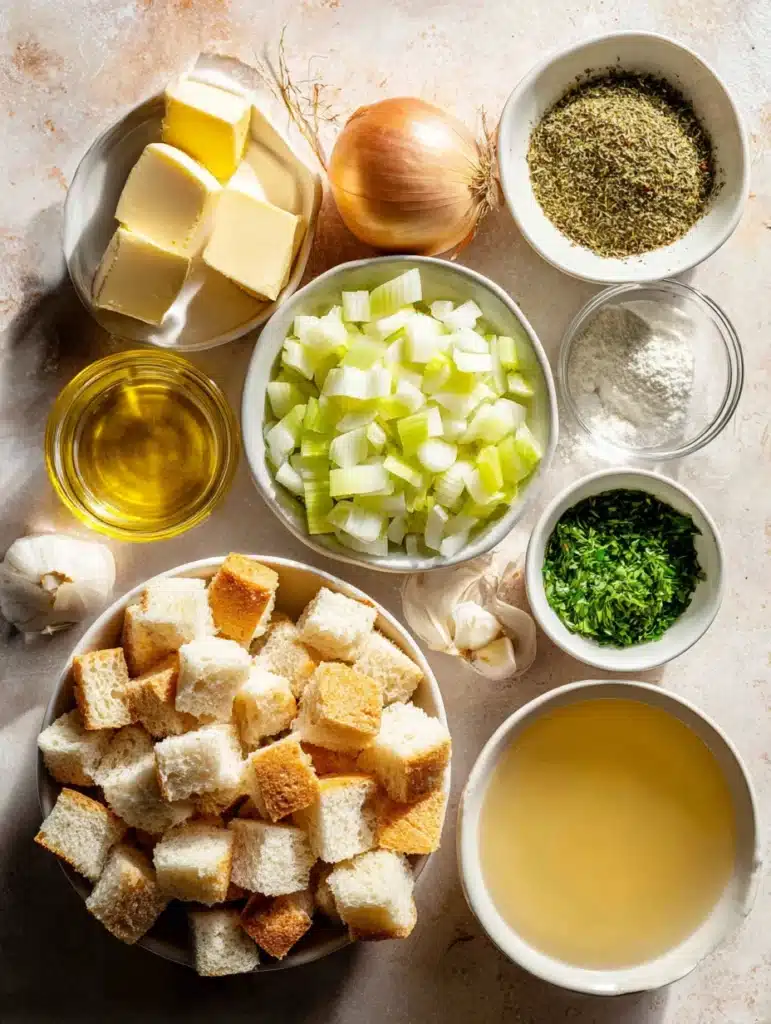
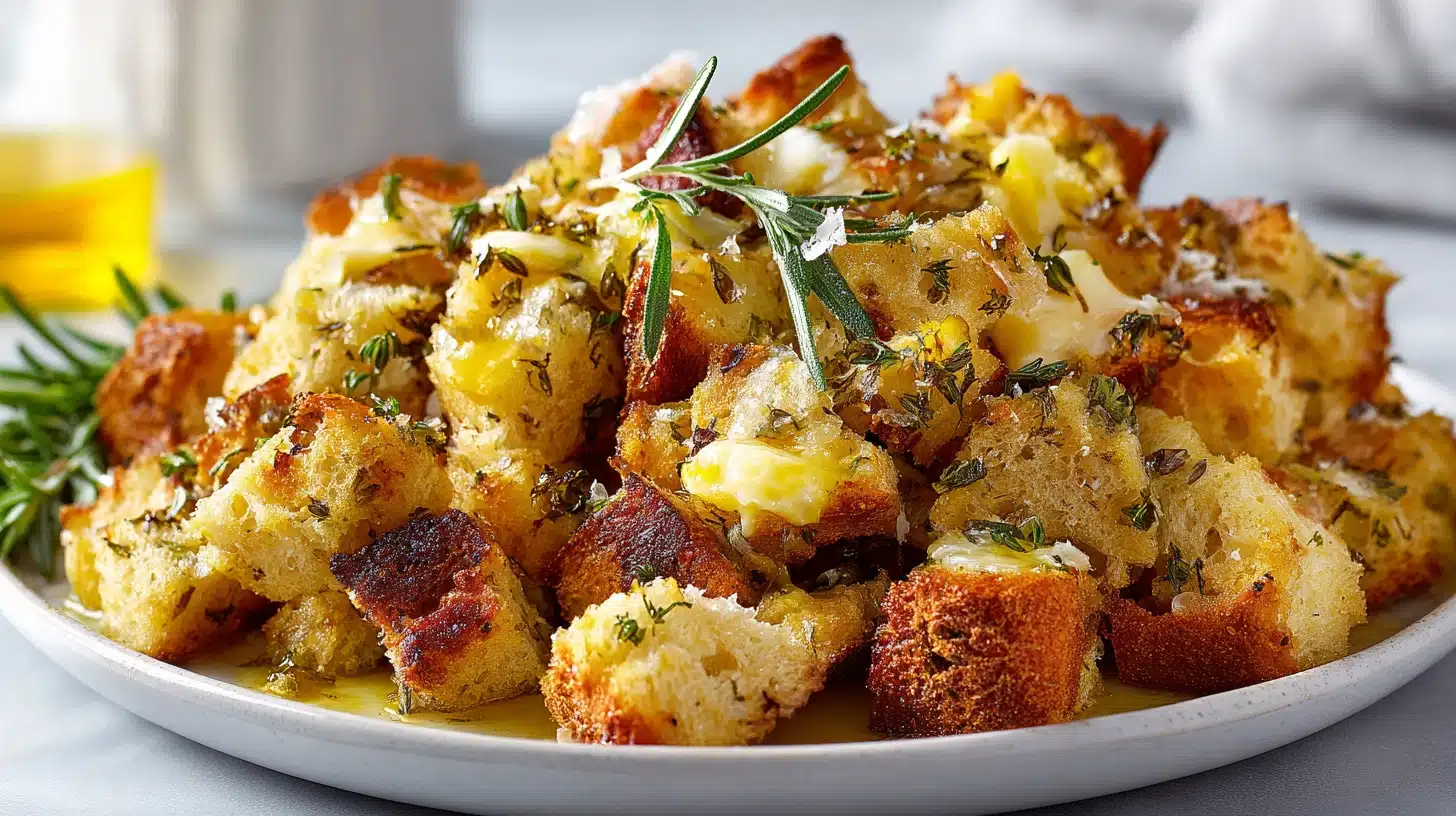
Buttery Homemade Bread Stuffing
Ingredients
Method
- Preheat oven to 350°F (175°C). Lightly butter a 9×13-inch baking dish.
- Spread bread cubes on a baking sheet and toast for 10–15 minutes until lightly golden. Set aside.
- In a large skillet, melt butter over medium heat. Add chopped onion and celery; cook until soft and fragrant, about 10 minutes.
- Stir in sage, thyme, and rosemary. Cook 1 minute more to release flavors.
- In a large mixing bowl, combine toasted bread cubes and sautéed vegetables. Toss gently to mix.
- Pour in warm broth gradually, stirring until bread is moistened but not soggy. Mix in beaten eggs and season with salt and pepper.
- Transfer to the prepared baking dish. Bake uncovered for 25 minutes, then cover with foil and bake an additional 20 minutes until golden and crisp on top.
- Brush with melted butter before serving for an extra golden finish.
Nutrition
Notes
Mix in chopped apples, sausage, or mushrooms for variation.
Leftovers can be refrigerated for 4 days or frozen for up to 3 months.
Tried this recipe?
Let us know how it was!Why Butter Makes All the Difference
Butter transforms this classic from ordinary to unforgettable. Melted butter coats every bread cube, locking in moisture and flavor while helping the top crisp beautifully in the oven. Always use real butter, not margarine — you’ll taste the difference in every bite.
When sautéing your onions and celery, cook them slowly in butter until translucent and aromatic. This releases natural sweetness that infuses the entire stuffing. The rich, golden color and deep aroma signal that your base is ready for the broth and herbs to come.
Advertisement
Pair it with your Cheddar Potato Soup for a hearty, satisfying holiday meal that everyone will crave seconds of.
Building Flavor – Herbs, Broth, and Aromatics
A good stuffing has heart, but a great stuffing has layers of flavor that come from carefully chosen herbs, perfectly balanced broth, and just the right amount of aromatics. This is where your buttery homemade bread stuffing takes on that signature Thanksgiving taste everyone remembers.
The Classic Herb Trio: Sage, Thyme, and Rosemary
If Thanksgiving had an aroma, it would be this trio of herbs sizzling in butter. Fresh sage adds earthiness, thyme brings brightness, and rosemary provides that unmistakable woodsy depth. Use fresh herbs when possible — about one tablespoon each, finely chopped. If you’re using dried herbs, cut that in half to keep the flavors balanced.
Lightly sauté these herbs in butter with diced onions and celery. This quick step allows the heat to release their essential oils, infusing every bread cube with flavor. For an aromatic twist, a small pinch of parsley or marjoram rounds out the blend beautifully.
The result? A fragrant kitchen and a stuffing that tastes like it’s been simmering for hours — even if it only took you minutes to prep. These savory notes pair wonderfully with hearty main dishes like Low-Carb Chicken Spinach Mushroom Bake, giving your meal a touch of traditional holiday flair.
Homemade vs. Store-Bought Broth
Your choice of broth defines the moisture and flavor profile of your stuffing. Homemade turkey or chicken broth gives the best depth, but high-quality boxed versions can still deliver rich results. Warm your broth before mixing it into the bread — cold liquid can cause uneven absorption.
Pour just enough broth to moisten the bread without drowning it. You want each cube coated but still holding its shape. Add it gradually, stirring as you go. The perfect stuffing should feel soft and buttery when pressed but not soggy.
If you’re serving this alongside Beef Mince and Cabbage Recipes, the balance of buttery bread and herbed broth will round out the savory richness of the plate.
Baking for the Perfect Crisp
When it comes to buttery homemade bread stuffing, baking isn’t just the final step — it’s where all the magic happens. The right balance of time, temperature, and moisture transforms your mixture into a golden, aromatic masterpiece that’s crispy on top and tender inside.
Moist Inside, Crisp Outside – The Ideal Ratio
The best stuffing has two textures in one bite: a golden, slightly crunchy top that gives way to a soft, buttery center. To achieve this, bake uncovered for the first 25 minutes to allow the edges to crisp. Then, cover loosely with foil and continue baking for another 15–20 minutes to let the interior steam gently.
If you prefer a deeper golden crust, remove the foil for the final five minutes and brush the top with a bit of melted butter. That final buttery touch enhances both the flavor and the glossy, mouthwatering finish that makes this dish unforgettable.
Be careful not to overbake — too much time in the oven dries out the center. When you insert a spoon and see steam rise while the edges remain golden, you’ve nailed it.
This method pairs beautifully with oven entrées like Pesto Chicken Flatbread, offering a satisfying crunch that complements savory main dishes perfectly.
Oven Tips and Timing for That Golden Crust
Preheat your oven to 350°F (175°C). If you’re using a convection oven, reduce the temperature to 325°F. Use a buttered glass or ceramic baking dish — metal pans brown too quickly and can cause uneven heat spots.
Before baking, let your assembled stuffing rest for about 10 minutes to allow the flavors to meld. This pause helps the bread absorb every drop of buttery broth evenly.
When the top turns a deep golden brown and your kitchen fills with the aroma of toasted bread and herbs, it’s time to serve. For a balanced Thanksgiving spread, try pairing it with Keto Jack-O-Lantern Stuffed Peppers — a festive contrast to your traditional stuffing’s rich flavor.
Serving, Storing, and Reheating Like a Pro
Once your buttery homemade bread stuffing emerges from the oven golden and fragrant, it’s time to present it in a way that makes your Thanksgiving table shine. From pairing ideas to storage tips, these steps will help you keep your stuffing tasting as good as it looks — even the next day.
Pairing Ideas for the Ultimate Thanksgiving Plate
Classic stuffing pairs effortlessly with any Thanksgiving spread, but it truly shines when served beside juicy roast turkey, creamy mashed potatoes, or a tangy cranberry sauce. The buttery flavor also complements chicken and vegetarian mains beautifully, adding texture and depth to the meal.
For a creative twist, scoop leftover stuffing into muffin tins and bake mini portions for individual servings. These crispy stuffing cups are ideal for buffets or smaller gatherings.
You can also use it to create next-day recipes — like stuffing waffles topped with turkey and gravy, or mix it into a Burger Bowl Recipe for a cozy comfort meal that reinvents leftovers.
When plating, drizzle a touch of melted butter or turkey drippings over the top to bring back that freshly baked aroma. Pair it with Cottage Cheese Dessert Recipes for a creamy, sweet finish to your meal.
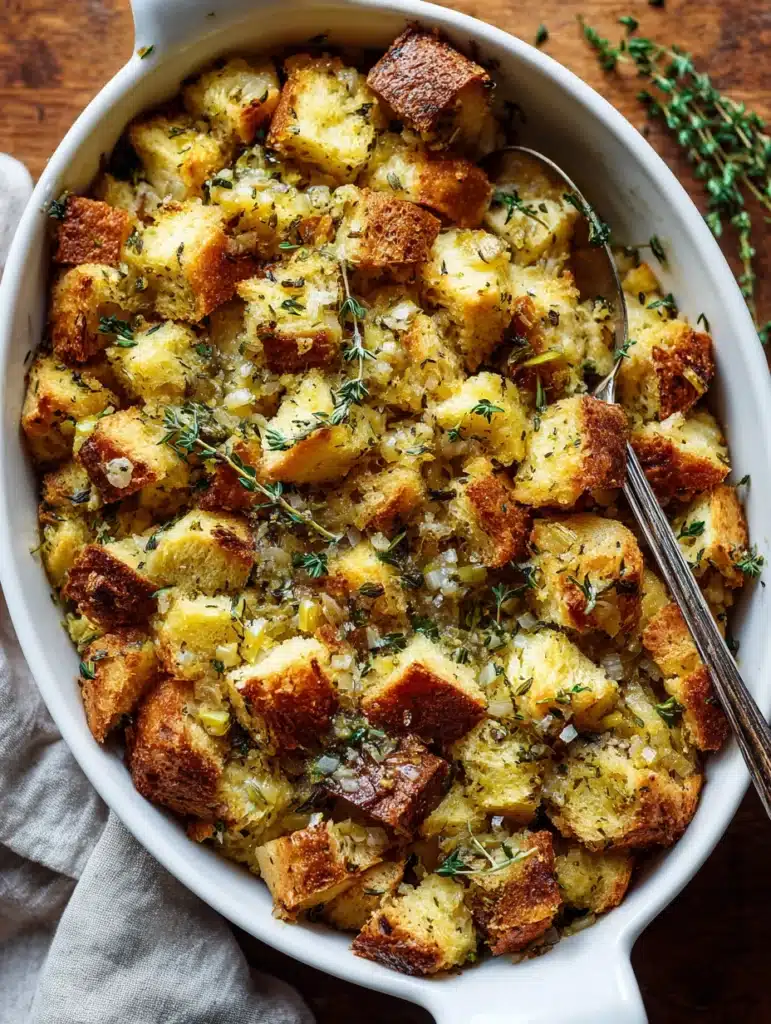
How to Store and Reheat Without Drying It Out
To store, let your stuffing cool completely before transferring it to an airtight container. It will keep in the refrigerator for up to four days or freeze for up to three months.
When reheating, add a tablespoon or two of broth or melted butter to restore moisture. Cover with foil and reheat at 325°F until warmed through. Avoid microwaving large portions — it dries out the texture and dulls the buttery flavor.
Properly stored and reheated, your stuffing will taste just as buttery, crisp, and comforting as the day you baked it — perfect for cozy post-holiday dinners or quick side dishes any time of year.
FAQs
Can I make buttery bread stuffing ahead of time?
Absolutely. Assemble the stuffing one day in advance and refrigerate it tightly covered. Before baking, let it sit at room temperature for 30 minutes, then bake as directed. This helps the flavors deepen overnight.
What’s the best bread for homemade stuffing?
A mix of French and sourdough bread works best. The combination gives you the perfect balance of soft interior and crunchy edges.
Can I make it vegetarian?
Yes! Simply replace the chicken broth with vegetable broth and use salted butter. You’ll still get the same rich, savory flavor.
How do I fix stuffing that’s too dry or soggy?
If it’s too dry, drizzle warm broth over the top before baking a few extra minutes. If it’s soggy, spread it thinly on a baking sheet and bake uncovered for 10–12 minutes to crisp it up.
Can I freeze leftover stuffing?
Yes — cool it completely, portion into freezer-safe containers, and freeze for up to three months. Reheat at 325°F with a splash of broth for best results.
Conclusion
A bite of buttery homemade bread stuffing is like a warm hug from the holidays — rich, comforting, and full of nostalgic flavor. With its perfect balance of crisp edges and tender, buttery bread, it’s no wonder this side dish has become a Thanksgiving favorite year after year.
Whether you’re pairing it with roast turkey, Beef Mince and Cabbage Recipes, or even a cozy Cheddar Potato Soup, this stuffing brings everyone together around the table. It’s simple, classic, and absolutely unforgettable.
So, gather your bread, butter, and herbs — and create a dish that smells like home, tastes like tradition, and keeps guests asking for seconds.