
Struggling with tough, chewy meat in your stew? You’re not alone. The perfect Irish Beef Stew is one of the most comforting dishes you can make, especially when you’re craving something warm and hearty on a cold evening. This traditional Irish recipe combines tender chunks of beef with root vegetables, rich broth, and aromatic herbs to create a meal that warms you from the inside out. The secret to achieving restaurant-quality Irish Beef Stew at home lies in understanding seven crucial techniques that transform ordinary ingredients into extraordinary comfort food.
Table of Contents
Table of Contents
Whether you’re preparing dinner for St. Patrick’s Day or simply seeking a satisfying weeknight meal, mastering these secrets will ensure your stew turns out perfectly tender every single time. This slow-cooked recipe delivers cozy flavors that will have your family asking for seconds, and the best part is that it actually gets better with time, making it ideal for meal prep or entertaining guests.
Ingredients
Main Ingredients:
- 3 pounds beef chuck roast, cut into 2-inch cubes
- 3 tablespoons all-purpose flour (or gluten-free flour blend)
- 2 teaspoons salt, divided
- 1 teaspoon black pepper, divided
- 3 tablespoons vegetable oil or beef tallow
- 2 medium yellow onions, roughly chopped
- 4 cloves garlic, minced
- 2 tablespoons tomato paste
- 1 cup Irish stout beer (Guinness) or substitute with additional beef broth
- 4 cups beef broth, preferably low-sodium
- 2 bay leaves
- 4 sprigs fresh thyme (or 1 teaspoon dried thyme)
- 1 pound carrots, peeled and cut into 1-inch pieces
- 1 pound Yukon gold potatoes, cut into 1.5-inch chunks
- 8 ounces parsnips, peeled and cut into 1-inch pieces (optional)
- 1 cup frozen peas (optional)
- Fresh parsley for garnish
Smart Substitutions:
- Replace beef chuck with beef brisket or short ribs for even richer flavor
- Use sweet potatoes instead of regular potatoes for added nutrition
- Swap parsnips with turnips or celery root
- For a gluten-free version, use cornstarch or arrowroot powder instead of flour
- Replace stout beer with red wine for a French twist
Timing
Prep Time: 20 minutes
Cook Time: 2 hours 30 minutes
Total Time: 2 hours 50 minutes
Servings: 6-8 servings
Advertisement
Make-Ahead Notes: This stew actually improves in flavor when made 1-2 days ahead. The flavors meld beautifully overnight in the refrigerator. You can also prepare the beef and vegetables the night before, store them separately, and begin cooking the next day. For even more convenience, this recipe freezes exceptionally well for up to 3 months.
Step-by-Step Instructions
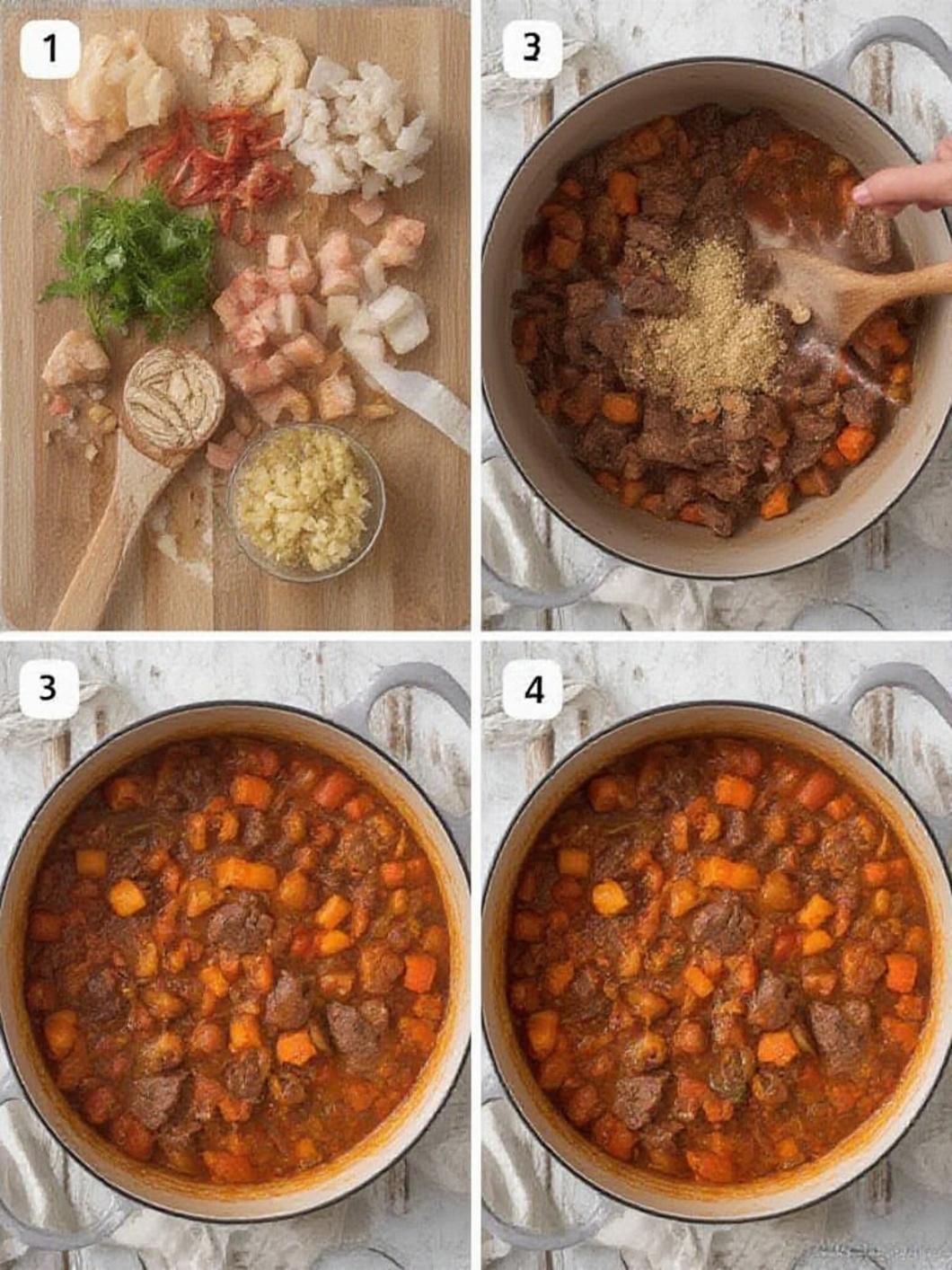
- Prepare the Beef: Pat the beef cubes completely dry with paper towels. This is crucial for achieving a good sear. In a large bowl, toss the beef with flour, 1 teaspoon salt, and 1/2 teaspoon black pepper until evenly coated. This coating creates a flavorful crust and helps thicken the stew naturally.
- Sear the Meat: Heat 2 tablespoons of oil in a large Dutch oven or heavy-bottomed pot over medium-high heat. Working in batches to avoid crowding, sear the beef cubes on all sides until deeply browned, about 3-4 minutes per side. Don’t rush this step—the caramelization adds incredible depth of flavor. Transfer browned beef to a plate and set aside.
- Build the Flavor Base: Reduce heat to medium and add the remaining tablespoon of oil to the pot. Add chopped onions and cook for 5-6 minutes until softened and golden. Add minced garlic and tomato paste, stirring constantly for 1-2 minutes until fragrant and the tomato paste darkens slightly.
- Deglaze: Pour in the stout beer, scraping up all the browned bits from the bottom of the pot with a wooden spoon. These fond bits are packed with flavor. Let the beer simmer for 2-3 minutes to cook off some of the alcohol.
- Combine and Simmer: Return the browned beef and any accumulated juices to the pot. Add beef broth, bay leaves, thyme, remaining salt, and pepper. Bring to a boil, then reduce heat to low, cover, and simmer gently for 1 hour and 30 minutes, stirring occasionally.
- Add Vegetables: Add carrots, potatoes, and parsnips (if using) to the pot. Stir to combine, cover, and continue simmering for another 45-60 minutes until the beef is fork-tender and the vegetables are cooked through but not mushy.
- Final Touches: Remove bay leaves and thyme sprigs. If using peas, stir them in during the last 5 minutes of cooking. Taste and adjust seasoning with additional salt and pepper if needed. For a thicker stew, mash a few potato pieces against the side of the pot or simmer uncovered for 10-15 minutes. Garnish with fresh chopped parsley before serving.
Nutritional Information
Per Serving (based on 8 servings): Approximately 425 calories, 38g protein, 32g carbohydrates, 15g fat, 5g fiber, 780mg sodium
This Irish Beef Stew provides an excellent source of protein, iron, and B vitamins from the beef, while the vegetables contribute fiber, vitamin A from carrots, and potassium from potatoes. The combination of protein and complex carbohydrates makes this a balanced, satisfying meal that keeps you full for hours. The slow-cooking method helps break down tough connective tissue in the beef, making it easier to digest while preserving nutrients in the vegetables. When made with lean beef chuck and plenty of vegetables, this stew offers a nutritious option for family dinners.
Healthier Alternatives
For a lighter version, trim excess visible fat from the beef chuck before cutting into cubes, which can reduce overall fat content by 20-30%. Use a leaner cut like beef sirloin, though note it may not be quite as tender. Increase the vegetable-to-meat ratio by adding an extra pound of mixed vegetables like mushrooms, celery, and green beans while reducing the beef to 2 pounds. Replace half the potatoes with cauliflower florets for a lower-carb option that still provides satisfying texture.
Serving Suggestions
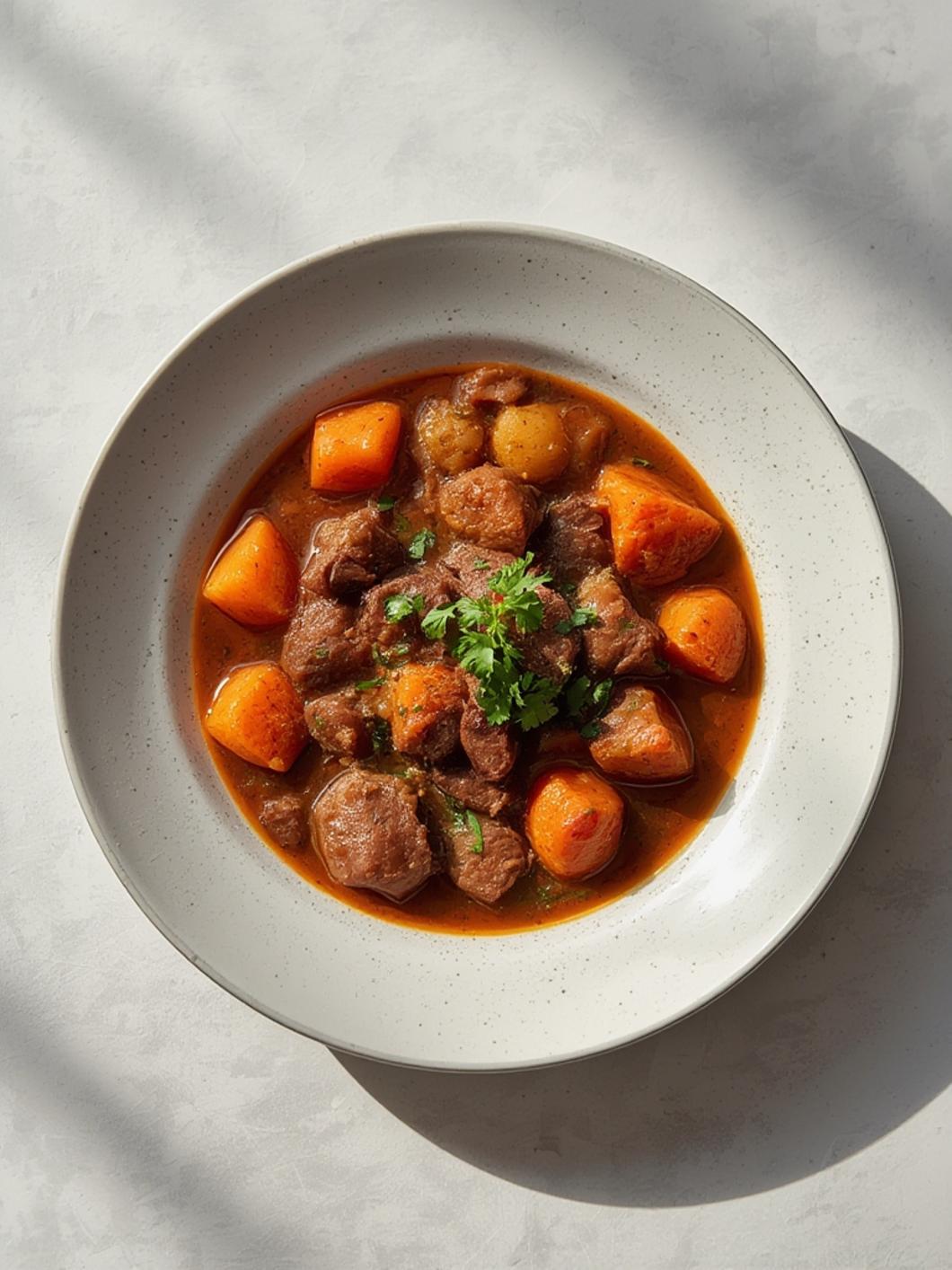
Serve your Irish Beef Stew in wide, shallow bowls to showcase the beautiful chunks of tender meat and colorful vegetables. The classic accompaniment is crusty Irish soda bread, perfect for soaking up every drop of the rich gravy. Alternatively, serve with warm buttered dinner rolls, garlic bread, or a simple baguette. For a heartier meal, ladle the stew over a bed of creamy mashed potatoes or buttered egg noodles.
This stew pairs wonderfully with a simple side salad dressed with apple cider vinaigrette to cut through the richness. Roasted Brussels sprouts or steamed green beans make excellent vegetable sides. For an authentic Irish experience, serve with colcannon (mashed potatoes with cabbage) or champ (mashed potatoes with scallions).
Beverage-wise, the stew pairs beautifully with the same Irish stout used in cooking, or try a robust red wine like Cabernet Sauvignon or Malbec. For non-alcoholic options, serve with sparkling apple cider, hot tea, or a rich hot chocolate. If you’re looking for variations, try this recipe with lamb instead—similar to Irish Lamb Stew, which offers a slightly gamier, equally delicious alternative.
Common Mistakes
Not Drying the Beef: Wet meat will steam rather than sear, preventing the flavorful crust from forming. Always pat beef completely dry before seasoning and cooking.
Overcrowding the Pan: Adding too much beef at once lowers the pan temperature, causing meat to release moisture and boil instead of browning. Work in batches for the best results.
Skipping the Deglazing Step: Those brown bits stuck to the bottom of the pot contain concentrated flavor. Always deglaze with beer or broth and scrape them up.
Boiling Instead of Simmering: High heat makes beef tough and stringy. Maintain a gentle simmer with just a few bubbles breaking the surface for tender, melt-in-your-mouth meat.
Adding Vegetables Too Early: Root vegetables become mushy if cooked for too long. Add them only during the last hour of cooking to maintain their texture.
Using the Wrong Cut of Meat: Lean cuts like sirloin or round will be dry and tough. Chuck roast has the right amount of marbling and connective tissue that breaks down into gelatin during slow cooking.
Not Tasting and Adjusting: Always taste before serving and adjust seasoning. Stew often needs a final boost of salt and pepper to bring all the flavors together.
Storage Tips
Refrigerating: Allow the stew to cool to room temperature, then transfer to airtight containers. Refrigerate for up to 4 days. The flavors actually deepen and improve after a day or two, making leftovers even more delicious than the first serving.
Freezing: Irish Beef Stew freezes exceptionally well for up to 3 months. Cool completely, then portion into freezer-safe containers or heavy-duty freezer bags, leaving 1 inch of headspace for expansion. Label with the date and contents. For best texture, slightly undercook the potatoes if you know you’ll be freezing the stew, as they can become grainy when frozen and reheated.
Reheating: Thaw frozen stew overnight in the refrigerator. Reheat gently on the stovetop over medium-low heat, stirring occasionally, until heated through (about 15-20 minutes). Add a splash of beef broth if the stew has thickened too much during storage. You can also reheat individual portions in the microwave on 50% power in 2-minute intervals, stirring between each. For food safety, ensure the internal temperature reaches 165°F before serving.
Conclusion
Mastering Irish Beef Stew is about understanding how time, temperature, and technique work together to transform simple ingredients into an extraordinary meal. By following these seven secrets—properly searing the meat, building layers of flavor, maintaining a gentle simmer, timing your vegetables correctly, and allowing the stew to develop over time—you’ll create a dish that rivals any Irish pub’s signature recipe. The beauty of this stew lies in its forgiving nature and its ability to improve with time, making it perfect for both novice cooks and experienced home chefs.
FAQs
Can I make Irish Beef Stew in a slow cooker?
Absolutely! Brown the meat and sauté the aromatics on the stovetop first, then transfer everything to your slow cooker. Cook on low for 7-8 hours or high for 4-5 hours, adding the vegetables during the last 2 hours on low or last hour on high.
How can I tell when the beef is done?
The beef is ready when it’s fork-tender, meaning a fork easily slides in and breaks the meat apart with minimal pressure. This typically takes 2-2.5 hours of gentle simmering. If the meat is still tough, continue cooking and check every 15 minutes.
Can I substitute the stout beer?
Yes, you can use beef broth, red wine, or even strong coffee as substitutes. Each creates a slightly different flavor profile. If omitting alcohol entirely, use additional beef broth plus 1 tablespoon of Worcestershire sauce and 1 tablespoon of balsamic vinegar for depth.
Why is my stew too thin?
If your stew is too thin, simmer uncovered for 15-20 minutes to reduce and thicken the liquid. Alternatively, mash some of the cooked potatoes against the side of the pot, or make a slurry with 2 tablespoons cornstarch mixed with 2 tablespoons cold water, then stir it into the simmering stew.
Can I add other vegetables?
Definitely! Mushrooms, celery, turnips, rutabaga, and pearl onions are all traditional additions. Add heartier vegetables like turnips with the carrots and potatoes, and delicate ones like mushrooms or peas during the last 15-20 minutes of cooking.
1 thought on “Irish Beef Stew”
Comments are closed.