
If you’ve scrolled through Instagram lately, you’ve probably seen a swirl of bright green lattes taking over your feed. That’s the magic of a matcha latte — a smooth, creamy drink blending vibrant Japanese green tea powder with frothy milk. Earthy, a touch grassy, and just slightly sweet, this eye-catching latte is more than just a trend. It’s a centuries-old tradition with a modern twist that brings a gentle caffeine lift and a whole lot of antioxidants to your cup.
Whether you’re looking to cut down on coffee jitters, boost your daily wellness routine, or simply savor something new and gorgeous, this ultimate guide to matcha lattes has you covered. We’ll break down exactly what’s in a matcha latte, explore if they’re truly healthy, and even show you how to whip one up at home that rivals any café — yes, even Starbucks.
Advertisement
Table of content
Table of Contents
What is a Matcha Latte?
What is Matcha?
Matcha is a finely ground powder made from specially grown and processed green tea leaves. Unlike steeped tea, where you toss the leaves after brewing, with matcha you actually consume the whole leaf — whisked right into water or milk. This means you’re sipping up more nutrients, more antioxidants, and more of that gentle green tea caffeine.
Not all matcha is the same. The best kind for lattes is ceremonial grade, which is a bright, vibrant green and slightly sweet. It’s traditionally used in Japanese tea ceremonies. Meanwhile, culinary grade is more muted in color, slightly more bitter, and best saved for baking or smoothies.
Why Put It in a Latte?
On its own, matcha has a bold, vegetal taste that some find grassy or earthy. Blending it with milk smooths out the edges, creating a creamy, balanced drink. The natural sweetness of milk (whether dairy, oat, or almond) pairs beautifully with matcha’s umami-rich flavor, making it incredibly sippable. Origins & Modern Popularity
Matcha has roots in Japanese Zen monasteries dating back centuries, prized for its ability to create calm alertness. Fast forward to today, and it’s become a global sensation, popping up everywhere from artisan coffee shops to Starbucks menus — loved equally for its health perks and its stunning green color.
Health Benefits & Caffeine
Is a Matcha Latte Good for You?
In moderation, absolutely. Unlike regular green tea that’s steeped, matcha powder means you’re actually consuming the whole leaf. This gives you a concentrated boost of antioxidants, particularly EGCG, known for fighting inflammation and supporting heart health. Matcha also contains chlorophyll, which may help the body’s natural detox processes, and a gentle dose of minerals like potassium and vitamin C.
Advertisement
But keep an eye on your add-ins: sweet syrups or heavy creams can quickly turn this healthy sip into a sugar bomb. If you’re mindful with sweeteners, a matcha latte is a wholesome, satisfying drink.
How Much Caffeine in a Matcha Latte?
A typical matcha latte has around 30–70 mg of caffeine, depending on how much matcha powder you use and how large your serving is. That’s about half (or even less) of what you’d get in a cup of coffee, which averages 95–120 mg.
Many people find matcha’s caffeine to be smoother — thanks to L-theanine, an amino acid that promotes calm focus. It means fewer jitters and no abrupt crash, making a matcha latte a favorite for afternoon pick-me-ups.
Weight Loss & Wellness Myths
It’s tempting to hope that a matcha latte is a miracle fat burner. While studies show that green tea compounds can support metabolism, it’s no magic potion. Still, replacing a sugary frappuccino or energy drink with a lightly sweetened matcha latte is a small switch that can make a meaningful difference over time.
How to Make the Perfect Matcha Latte
Matcha Latte Recipe (Hot & Iced)
Making a matcha latte at home is surprisingly simple. Here’s a basic method that works for both hot and iced versions:
Ingredients:
Advertisement
- 1–2 tsp ceremonial grade matcha powder
- 2 tbsp hot water (about 175°F, not boiling)
- 8 oz milk of choice (oat, almond, whole milk, etc.)
- Sweetener to taste (honey, maple syrup, or simple syrup)
- Ice (for iced version)
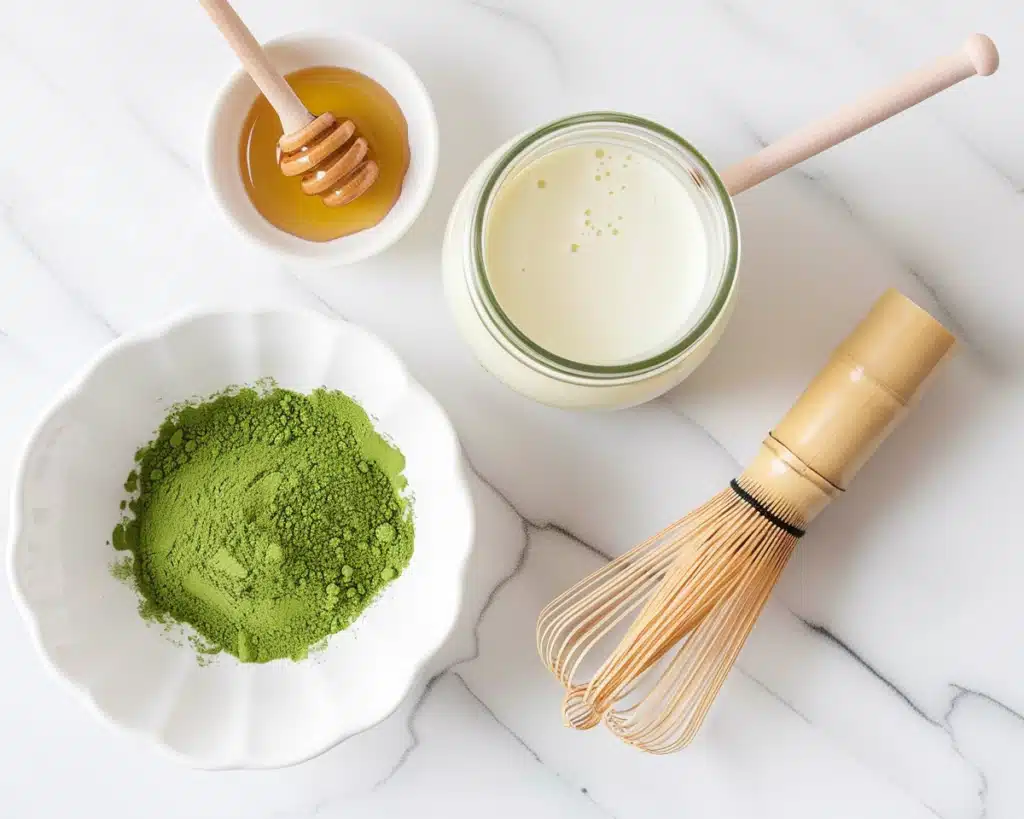
Instructions:
- Sift your matcha into a small bowl or cup to remove any clumps.
- Pour in hot water. Whisk vigorously in a zig-zag motion (or use a handheld frother) until smooth and slightly frothy.
- For a hot latte, heat your milk until steaming, then froth if you like. Pour over the matcha and stir in sweetener.
- For an iced latte, fill a glass with ice, add sweetener and cold milk, then pour the whisked matcha over. Give it a gentle swirl.
Tips for the Best Froth & Flavor
- Always sift your matcha — it prevents lumps and ensures a smooth sip.
- Use water that’s hot but not boiling (about 175°F). Too hot, and it makes matcha taste bitter.
- A traditional bamboo whisk (chasen) creates the best foam, but a handheld frother or even a small whisk works in a pinch.
- Adjust sweetness slowly. Good matcha has natural mellow sweetness that may not need much extra.
Sweeteners & Fun Add-Ins
Want to switch it up? Try adding:
- A splash of vanilla extract
- A drizzle of honey or maple syrup
- A sprinkle of cinnamon
- Even a few drops of lavender syrup for a floral twist
Fun Variations to Try
Beyond Basic – Tasty Matcha Twists
Once you’ve mastered the classic matcha latte, there’s a whole colorful world of variations to explore. These playful spins bring new flavors (and plenty of Instagram-worthy moments) to your cup.
Strawberry Matcha Latte
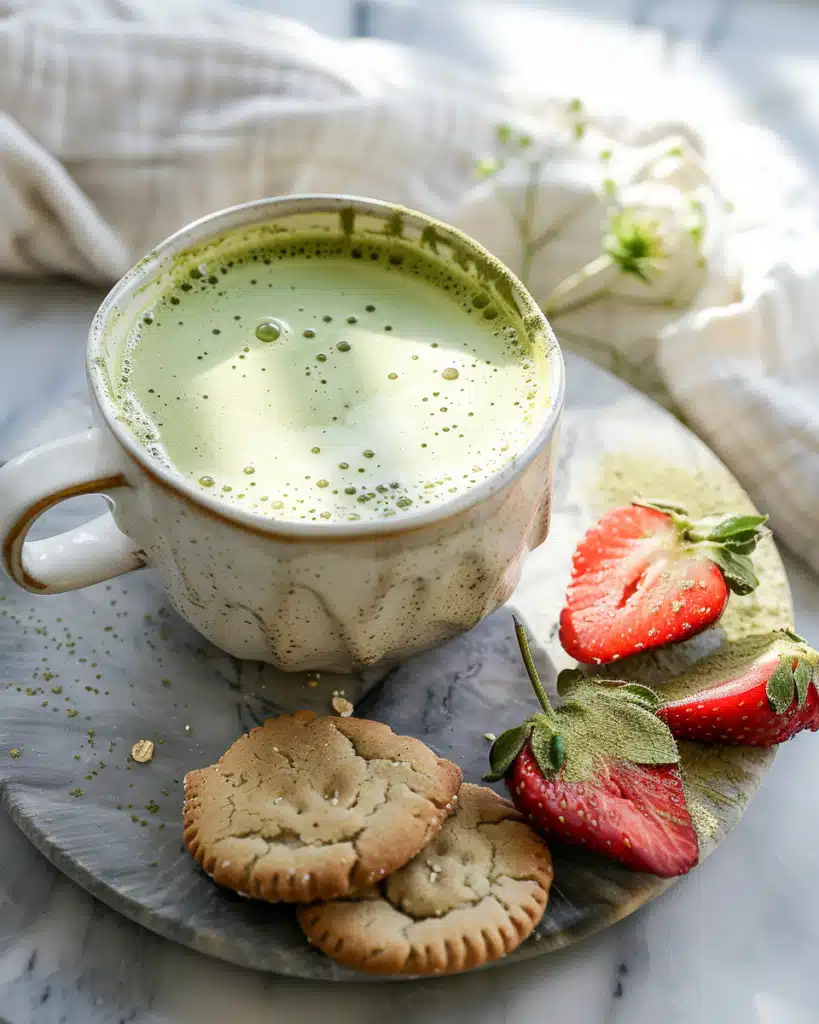
Blend fresh or frozen strawberries with a splash of milk and sweetener to create a pink cream. Pour it over ice, then top with your whisked matcha. The pink-green gradient is as gorgeous as it is delicious.
Matcha Frappé
Craving something extra frosty? Blend your matcha latte with ice cubes for a thick, slushy treat. Top with whipped cream or a dusting of extra matcha powder.
Matcha with Brown Sugar Boba
Try pairing matcha with chewy tapioca pearls soaked in brown sugar syrup. It’s a fun mashup of bubble tea and a matcha latte that’s hard to resist.
FAQs
What is in a matcha latte?
At its simplest, a matcha latte combines matcha powder, hot water, and your milk of choice. Many add a touch of sweetener like honey, maple syrup, or vanilla. The matcha gets whisked with the water into a frothy concentrate, then blended with milk — hot or iced.
Are matcha lattes healthy?
Yes, when made mindfully. Because matcha uses the whole ground tea leaf, you get more antioxidants (like EGCG), plus L-theanine, which helps promote calm focus. Just watch out for loads of added sugar, especially in pre-mixed café versions.
Is matcha latte stronger than coffee?
Not typically. A standard matcha latte has about 30–70 mg of caffeine, while an average cup of coffee packs around 95–120 mg. Thanks to L-theanine, matcha delivers a smoother, steadier energy boost without the crash many get from coffee.
Does Starbucks do matcha?
They do! Starbucks offers hot and iced matcha lattes. However, their matcha is a sweetened pre-mix, meaning it already contains sugar — something to keep in mind if you’re watching your intake.
Is matcha latte bitter or sweet?
Good quality matcha is naturally earthy, slightly grassy, and a bit sweet. Lower grades can taste more bitter. Adding milk and a hint of sweetener balances the flavors beautifully.
Can kids drink matcha?
Matcha is generally safe in small amounts, but because it does contain caffeine, it’s best for older kids or teens. Always check with your pediatrician if unsure.
Does a matcha latte help you lose weight?
Matcha contains catechins that may support metabolism, but it’s not a magic solution. Think of it as a wholesome alternative to sugary lattes that can fit into a balanced lifestyle.
Conclusion — Your Matcha Moment Awaits
Ready to swap your usual coffee run for something a little greener? A matcha latte is more than just a trendy sip — it’s a creamy, antioxidant-rich treat that brings a calm energy boost to your day. Whether you keep it classic or swirl in strawberries, experimenting with matcha at home is fun, surprisingly simple, and oh so satisfying.
If you loved this guide, we’d be thrilled if you pinned your favorite recipe ideas on our Pinterest or explored more of our kitchen stories over on Medium. And don’t forget to drop a comment below — we’d love to hear how your homemade matcha latte turns out!
1 thought on “Matcha Latte — Your New Creamy Green Obsession”
Comments are closed.