
When the weather turns chilly or you’re craving the ultimate comfort food, nothing beats a steaming bowl of Irish Lamb Stew. This traditional dish has warmed Irish homes for centuries, combining tender chunks of lamb with simple vegetables and aromatic herbs to create something truly magical. Despite its rich, complex flavor, this Irish Lamb Stew requires just five core ingredients, making it perfect for busy weeknights or lazy Sunday cooking.
Table of Contents
Table of Contents
What makes this recipe special is its beautiful simplicity. Unlike complicated dishes that require exotic ingredients or advanced techniques, Irish Lamb Stew relies on quality ingredients and patient cooking to develop its signature flavor. The lamb becomes melt-in-your-mouth tender, the vegetables absorb all those savory juices, and the broth transforms into liquid gold. Whether you’re celebrating St. Patrick’s Day or simply seeking a satisfying meal, this hearty stew delivers authentic Irish comfort in every spoonful.
Ingredients
Core Ingredients:
- 2.5 pounds lamb shoulder or leg, cut into 2-inch chunks
- 2 pounds Yukon Gold potatoes, peeled and quartered
- 4 large carrots, peeled and cut into 2-inch pieces
- 3 large yellow onions, roughly chopped
- 4 cups low-sodium beef or lamb broth
- 3 tablespoons fresh thyme (or 1 tablespoon dried thyme)
- 2 bay leaves
- Salt and black pepper to taste
- 3 tablespoons all-purpose flour (for dredging)
- 2 tablespoons olive oil or butter
Optional Add-Ins:
- 2 cups chopped cabbage for added texture
- 1 cup frozen peas (add during last 10 minutes)
- 2 celery stalks, chopped
- 4 cloves garlic, minced
- 1 tablespoon Worcestershire sauce for depth
- Fresh parsley for garnish
Smart Substitutions:
- Use beef chuck roast instead of lamb for a variation similar to Irish Stew
- Replace potatoes with turnips or parsnips for lower carbs
- Swap fresh thyme with rosemary for a different aromatic profile
- Use vegetable broth and mushrooms for a vegetarian version (omit lamb)
Timing
Prep Time: 20 minutes
Cook Time: 2 hours 30 minutes
Total Time: 2 hours 50 minutes
Advertisement
Servings: 6-8 generous portions
Make-Ahead Notes: This stew actually improves in flavor when made a day ahead. The flavors meld beautifully overnight, making it perfect for meal prep or entertaining. You can also brown the meat and prep vegetables the night before, then assemble and cook the next day.
Step-by-Step Instructions
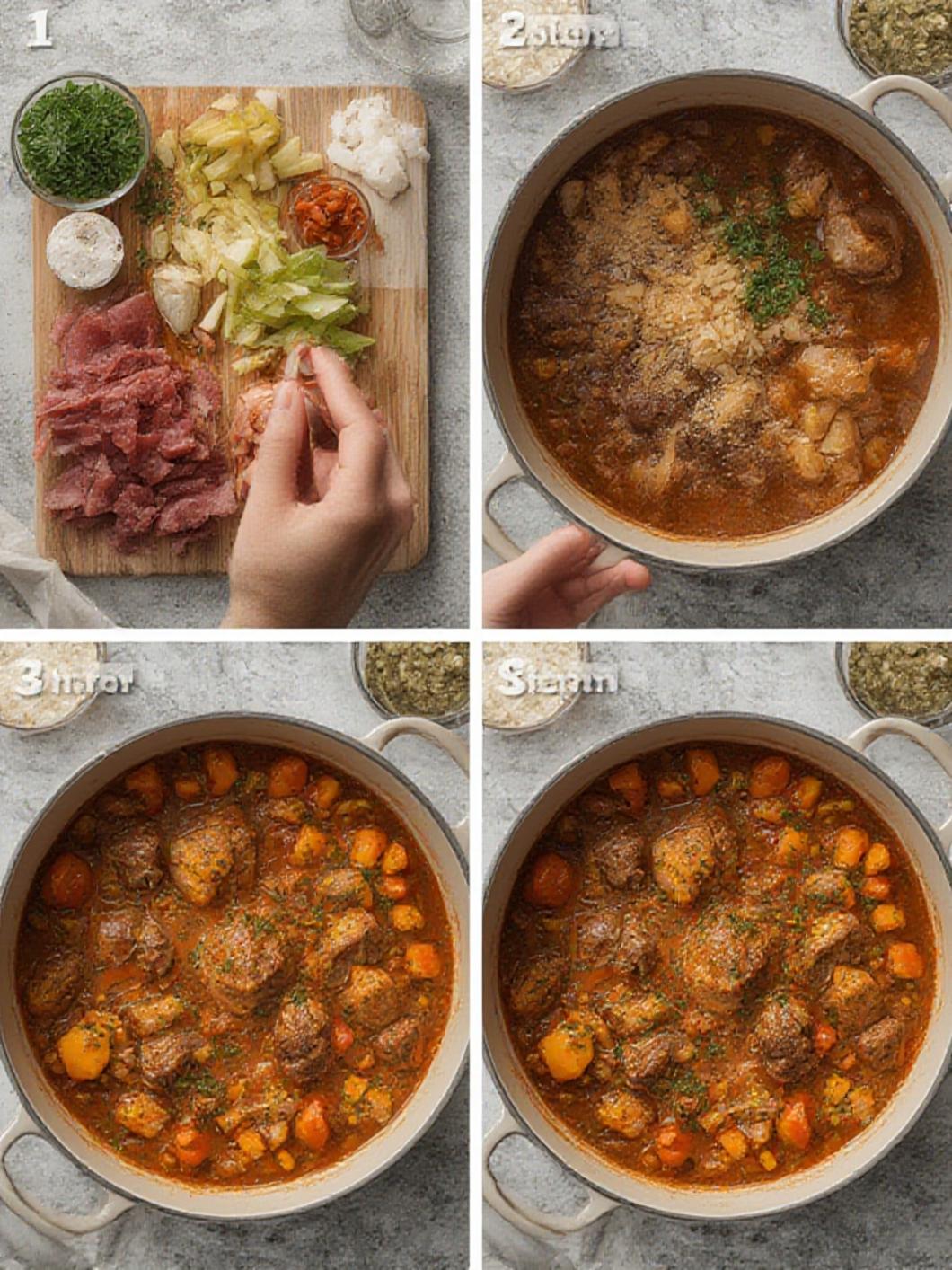
Step 1: Prepare the Lamb
Pat the lamb chunks completely dry with paper towels—this is crucial for proper browning. Season generously with salt and black pepper, then lightly dredge in flour, shaking off any excess. The flour helps create a beautiful crust and will thicken the stew later.
Step 2: Brown the Meat
Heat olive oil or butter in a large Dutch oven over medium-high heat. Working in batches to avoid crowding, brown the lamb pieces on all sides, about 3-4 minutes per side. Don’t rush this step—good caramelization builds incredible flavor. Transfer browned meat to a plate and set aside.
Step 3: Sauté the Aromatics
Reduce heat to medium and add the chopped onions to the same pot. Cook for 5-6 minutes, stirring occasionally and scraping up those flavorful brown bits from the bottom. The onions should soften and turn translucent. If using garlic, add it during the last minute.
Step 4: Build the Stew Base
Return the browned lamb to the pot along with any accumulated juices. Add the carrots, thyme, and bay leaves. Pour in the broth, ensuring the liquid covers most of the ingredients. If needed, add water to reach the right level. Bring everything to a boil.
Step 5: Simmer Low and Slow
Once boiling, reduce heat to low, cover the pot, and let it simmer gently for 1.5 hours. Stir occasionally to prevent sticking. The lamb should start becoming tender, and your kitchen will smell absolutely amazing.
Step 6: Add Potatoes
After 1.5 hours, add the quartered potatoes. These go in later because they cook faster than the meat. Continue simmering, covered, for another 45-60 minutes until both lamb and potatoes are fork-tender.
Step 7: Final Seasoning
Taste and adjust seasoning with additional salt and pepper as needed. If the stew seems too thin, uncover and simmer for 10-15 minutes to reduce. If too thick, add a splash of broth or water. Remove bay leaves before serving.
Step 8: Rest and Serve
Let the stew rest for 10 minutes before serving. This allows the flavors to settle and the temperature to become perfect for eating. Garnish with fresh parsley if desired and ladle into deep bowls.
Nutritional Information
Per Serving (based on 8 servings):
- Calories: approximately 385
- Protein: 32g
- Carbohydrates: 28g
- Fat: 15g
- Fiber: 4g
- Sodium: 420mg
Irish Lamb Stew provides an excellent source of high-quality protein, essential vitamins, and minerals. Lamb is rich in iron, zinc, and B vitamins, particularly B12, which supports energy metabolism and nervous system health. The vegetables contribute fiber, potassium, and vitamin A from the carrots. While this is a hearty, satisfying dish, it contains balanced macronutrients that can fit into a well-rounded diet. The relatively moderate calorie count per serving makes it filling without being overly heavy.
Healthier Alternatives
Reduce Fat Content: Trim all visible fat from the lamb before cooking, or choose extra-lean cuts. You can also refrigerate the finished stew overnight and skim off the solidified fat from the top before reheating.
Lower Sodium Option: Use homemade unsalted broth instead of store-bought, and control the salt you add during cooking. Fresh herbs provide plenty of flavor without sodium.
Increase Vegetables: Add extra carrots, celery, cabbage, or turnips to boost fiber and nutrient density while reducing the meat-to-vegetable ratio.
Whole Food Approach: Skip the flour dredging step to make the recipe naturally gluten-free. The stew will be slightly thinner but equally delicious.
Portion Control: Serve the stew over a bed of steamed greens like kale or spinach instead of alongside bread, adding nutrients without extra calories.
Serving Suggestions
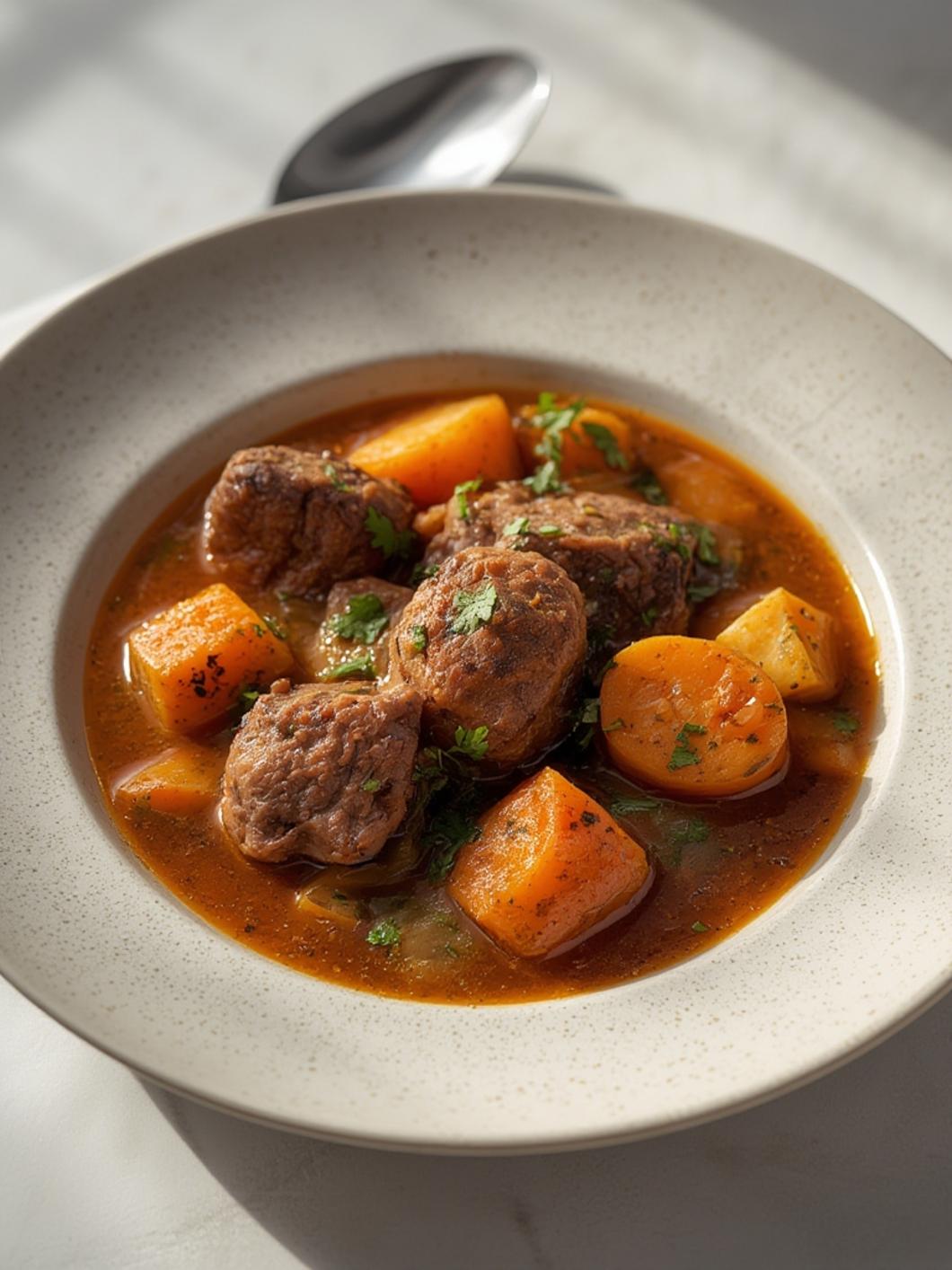
Traditional Pairings:
Irish Lamb Stew shines when served with crusty Irish soda bread, perfect for soaking up every drop of that rich broth. Buttered dinner rolls or a warm baguette also work beautifully. For an authentic experience, serve with a side of colcannon (mashed potatoes with cabbage) or simple buttered cabbage.
Modern Accompaniments:
Try serving over creamy mashed potatoes or buttered egg noodles for an extra-hearty meal. A simple green salad with vinaigrette provides a refreshing contrast to the rich stew. Roasted Brussels sprouts or green beans add color and texture to your plate.
Beverage Pairings:
A pint of Irish stout like Guinness complements the savory lamb perfectly and honors the dish’s heritage. For wine lovers, a medium-bodied red like Côtes du Rhône or Merlot matches well. Non-alcoholic options include sparkling water with lemon or traditional Irish breakfast tea.
Garnishes and Toppings:
Fresh chopped parsley adds brightness and color. A dollop of sour cream or Greek yogurt provides tangy contrast. Crispy fried onions or a sprinkle of sharp cheddar cheese makes for a delicious modern twist.
Common Mistakes
Skipping the Browning Step: Many cooks skip searing the meat to save time, but this caramelization creates deep, complex flavors essential to great stew. Always brown meat in uncrowded batches for best results.
Cutting Vegetables Too Small: Small vegetable pieces turn to mush during the long cooking time. Keep chunks large (about 2 inches) so they maintain texture while absorbing flavor.
Cooking at Too High Heat: Boiling instead of gentle simmering makes the lamb tough and stringy. Keep the heat low and be patient—low and slow is the secret to tender meat.
Adding Potatoes Too Early: Potatoes cook faster than lamb and will disintegrate if added at the beginning. Wait until the meat is mostly tender before adding them.
Not Seasoning Properly: Stews need generous seasoning. Taste before serving and adjust salt and pepper as needed. Remember, the flavors should be bold and satisfying.
Using Too Much Liquid: While stew should be brothy, too much liquid makes it soupy. The liquid should just cover the ingredients, and you can always add more if needed during cooking.
Storage Tips
Refrigerator Storage: Allow the stew to cool completely, then transfer to airtight containers. Properly stored, Irish Lamb Stew keeps beautifully in the refrigerator for 4-5 days. The flavors continue developing, making leftovers even more delicious.
Freezing Instructions: This stew freezes exceptionally well for up to 3 months. Cool completely, portion into freezer-safe containers leaving 1 inch of headspace for expansion, and label with the date. For best texture, slightly undercook the potatoes if you plan to freeze.
Reheating Methods: Thaw frozen stew overnight in the refrigerator. Reheat gently on the stovetop over medium-low heat, stirring occasionally and adding a splash of broth if needed to restore consistency. You can also microwave individual portions in 2-minute intervals, stirring between each. Avoid boiling during reheating, as this can make the meat tough.
Food Safety Tips: Never leave stew at room temperature for more than 2 hours. Cool large batches quickly by transferring to shallow containers or placing the pot in an ice bath, stirring occasionally.
Conclusion
Easy 5-Ingredient Irish Lamb Stew proves that simple ingredients, when treated with care and patience, create extraordinary comfort food. This traditional recipe brings the warmth of Irish hospitality to your table, whether you’re serving it for a special occasion or a cozy family dinner. The tender lamb, hearty vegetables, and aromatic herbs combine to create a dish that nourishes both body and soul.
FAQs
Can I use a different cut of lamb?
Yes! While lamb shoulder is traditional and offers the best flavor-to-tenderness ratio, you can use lamb leg, shanks, or neck. Avoid lean cuts like loin, as they become dry during long cooking. Bone-in cuts add extra flavor but require longer cooking time.
How do I know when the lamb is done?
The lamb is perfectly cooked when it’s fork-tender, meaning it easily pulls apart with gentle pressure from a fork. This typically takes 2-2.5 hours of simmering. If the meat is still tough, continue cooking and check every 15 minutes.
Can I make this in a slow cooker?
Absolutely! Brown the meat on the stovetop first, then transfer everything to your slow cooker. Cook on low for 7-8 hours or high for 4-5 hours, adding potatoes during the last 2 hours on low or 1 hour on high.
What if my stew is too watery?
Remove the lid and simmer vigorously for 15-20 minutes to reduce the liquid. Alternatively, mix 2 tablespoons cornstarch with 3 tablespoons cold water, stir into the stew, and simmer for 5 minutes until thickened.
Can I make this recipe ahead for a party?
Irish Lamb Stew is ideal for make-ahead entertaining! Prepare it 1-2 days in advance and refrigerate. The flavors deepen beautifully overnight. Reheat gently on the stovetop before serving, adding a little broth if needed to adjust consistency.